You read right... Crossway is giving access to their Global Study Bible away for free! (This is of course digital access only; don't expect them to mail you a physical book for nothing.) Crossway has been so generous over the years in providing digital access to incredible resources like this for minimal or no cost - take advantage of the opportunity to dig deeper into the Word!
The easiest way to jump into the ESV GSB: ESVBible.org (click "Apps" then click "Global Study Bible Online"). You can also purchase access to a number of other study Bibles there, if you are so inclined!
Showing posts with label ESV. Show all posts
Showing posts with label ESV. Show all posts
Tuesday, April 28, 2015


Friday, January 3, 2014
In A Year, Take 2, Part B
By the way, yesterday I blogged about how I'm planning to take the Bible by storm this year using the YouVersion Bible app, but I didn't mention another thing I'm also doing this year. I have about a 25 or 30-minute commute in to work every morning, and I've decided to use that time every day to listen to my favorite audio version of the Bible. Several years ago I purchased this audio New Testament read by a guy named Marquis Laughlin. I've listened to a lot of it in bits and pieces, but I've decided to start it from Matthew 1:1 and just let it run in the car on my commute in (my commute home I'll listen to the radio or whatever else I want; I'm not in a hurry). If you think this sounds like a good idea, there are a number of audio Bibles for sale in several different formats - MP3, audio CD, even some devices that come pre-loaded with audio Bibles on them. Or, use your smartphone and one of the apps like YouVersion, Bible Gateway, eBible, or Bible.is which have audio built into them for free (the Bible.is app has "dramatized" versions, which will have one of two affects on you: either you will feel immersed into the experience, or you will find the dramatic music a bit over the top. Try it out and see which reaction you have!)
The main point is, use whatever tools you have at your disposal to get into the Word. You will in no way regret it!
The main point is, use whatever tools you have at your disposal to get into the Word. You will in no way regret it!
Saturday, June 30, 2012
One Week on One Chapter
Last week I gave myself an interesting goal: study a particular chapter of the Bible a little every day and see what I can get out of it. The problem is that most of my Bibles and study materials (some of which appear in the picture at the top of this post from a year and a half ago) are currently in storage because of a move last year. But I do still have a number of resources at my disposal, and I decided to see what I could come up with!
The first day I read the passage from the New Living Translation (which is what my pastor uses during his messages) from my NLT Life Application Study Bible. This gave me a basic overview of the passage, plus some real-world applications. I don't really have a lot of trust for the NLT as a study text (not for inductive study methods, anyway) but it reads easily and it's certainly good enough to give you an idea of what the writer is talking about.
There was something that was puzzling me, hinging around one specific word in the passage, so the next day I fired up the Logos app on my phone. It's kind of a little brother to the Logos/Libronix software you can buy for your computer. It's actually pretty good for doing light Bible study using a phone; the screen can divide into two parts which hold different translations or books, and it can do some simple word study kind of stuff. It's nowhere as good as the desktop version, but I just had my phone handy at the time, and it satisfied my curiosity. I read the passage again using the New American Standard Version on the phone, and it is tied in to the Greek/Hebrew stuff, so it was simple to do my word study.
The next day I fired up MyStudyBible.com and read the chapter through in the Holman Christian Standard Version. I actually used my phone browser for this, and it worked out reasonably well. I still wasn't 100% satisfied with my word study results from the Logos app, and MyStudyBible.com has a terrific "click the underlined word to see the Greek or Hebrew source word" thing going on, and it clarified what I had discovered the day before. And you can't beat the price for using the HCSB Study Bible on this site... free!
The next day I read the chapter in the ESV translation on ESVBible.org. On this site you can read the ESV Study Bible notes, and although there is a minimal cost to access them, I highly recommend it; the ESV Study Bible is still my preferred study Bible. The notes were terrific; I was really getting a good handle on what I had been reading all week.
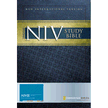
The next day I pulled out my NIV Study Bible to read the passage in the New International Version. This is my second favorite study Bible, a close runner-up to the ESV Study Bible. The NIV is probably my second-favorite translation, too... I thought for a while that the HCSB was going to take over that spot, but I've been disappointed with the translation in a few spots... maybe I'll blog about some of them one day. I still like the Holman translation, but I like the NIV better. This is an older copy of the NIV Study Bible, so this is the 1984 NIV, although I have no problem with the parts I've read from the newest edition.
The next day I pulled out the Life Application Study Bible and went through the chapter again in that book; I wanted to see if what I read made better sense to me after being through the chapter so many times. Sure enough, the text and the study notes were more meaningful to me this time through than before. I must have learned something!
How much did I pay to do all of this? Nothing! Of course, I already had the materials at my disposal; maybe you own a study Bible or two, or maybe you don't. But there are plenty of Bible study resources online; you could study a passage for weeks just using the resources on Blue Letter Bible alone and never run out, and that site is free!
I used a couple of physical volumes in my study, but the astonishing fact is that I did most of my study of this passage (it was 1 Peter 1, by the way, but it could have been any chapter) using only my low-powered Android cell phone! Just a few years ago that would have been science fiction; these days there are a wealth of materials available to anyone with a smart phone, anywhere they have a data connection (or in some cases, even without a data connection). With only the meager resources at my disposal, I did a study that would have taken hours in a physical library full of Bible commentaries fifteen years ago. We are truly blessed these days with a rich variety of sources of information about the Bible literally at our fingertips.
The real question here is: why do Christians not have a deeper understanding of the teachings of the Bible? With all of these resources available, there is no reason every Christian couldn't know as much about the Word as a graduating seminary student a half-century ago. Why don't we?
I'll leave you to answer that question yourself in the comments section below.
Saturday, April 14, 2012
YouVersion - you should have it on your phone
A few days ago I did something I haven't done often. I wrote a "User Review" of an app on the Android Market:

Scan to download the Bible to your phone
YouVersion's Bible app really is the cream of the crop for mobile device Bible reading. Well, I'll temper that statement a little bit: the YouVersion app is free, and there may be paid apps out there that rival it in one way or another. In fact, since I use the Logos software on my home computer, I also have the Logos Android app installed, and it gives me a bunch of study materials that YouVersion doesn't have (the ESV Study Bible notes, for example), and on top of that it lets me split my screen in half and view two translations at once! But I use YouVersion far more often, and here's why:
The app I was talking about is of course YouVersion, which I have mentioned here in the blog several times before. If you have it on your phone, it's probably just called "Bible". If you don't have it on your phone, right away you should visit http://youversion.com/download with your phone and download it! Here's a QR code you can scan to take you there if that's the way you roll:This is the Cadillac of Bible apps. It's designed simply to get you reading the Bible; it has very little in the way of study tools such as cross-references or Greek/Hebrew lexicons. What it does have is just about every Bible translation that the layman has ever heard of, even in audio in some cases, and scads of "reading plans" to help you get engaged with the translation of your choice. It eliminates any excuse you might have for not reading the Bible regularly. The icing on the cake is that it's free!

Scan to download the Bible to your phone
YouVersion's Bible app really is the cream of the crop for mobile device Bible reading. Well, I'll temper that statement a little bit: the YouVersion app is free, and there may be paid apps out there that rival it in one way or another. In fact, since I use the Logos software on my home computer, I also have the Logos Android app installed, and it gives me a bunch of study materials that YouVersion doesn't have (the ESV Study Bible notes, for example), and on top of that it lets me split my screen in half and view two translations at once! But I use YouVersion far more often, and here's why:
- YouVersion has probably every Bible translation you've ever heard of. It certainly has my favorites... the ESV, NAS, HCSB, NIV, NLT. There are scads of English versions, and a bunch of non-English translations as well.
- It's easy to use. You open it up, tap the icon that says "Bible", and you're reading the Bible! Changing the passage you're looking at or changing the translation you're reading are intuitive processes (which is something I can NOT say about the Logos app... changing translations or passages in that app is pretty convoluted until you get used to it).

This is what it looks like when you're reading on
Android... how simple is THAT? - Audio. Not a recreational reader? Staring at a page of text makes your eyes roll back in your head? The YouVersion app has audio files for many of their translations, which means that after you point and click your way to a passage, you can listen to it instead of (or in addition to) reading it. This means that you could listen to the Bible in your car on a daily commute (I've done it), while you're going to sleep at night (done that too), or wherever you are.
- Reading plans. YouVersion has tons of daily reading plans that you can choose from. Some of them are only a couple of days or a week long and cover specific topics or books; others range up to long-term plans to read through the entire Bible. And you can use the audio in conjunction with your reading plan, so instead of reading passages from sometimes several different books/locations, you can have them read to you. I'm working on a reading plan that has a two chapters assigned each day from two different books. If I start the audio running on the first chapter, when it reaches the end it proceeds to the second chapter automatically! How cool is THAT? If you sign up for a free YouVersion account, you can track your reading over time, and you can actually read through an app or their Web version and you "get credit" from whichever you use (so you could read from your phone one day, listen to audio on your phone the next day, and read on your computer the next day, and the system tracks your progress from all three). It can also be set up to fire an alert on your phone every day to remind you to read your passage, and if you miss a day or two you can shift your reading program's dates so that today's reading is the only one you have to complete to be caught up. No guilt trip and no scrambling to catch up by reading multiple days... nice! It's the least stressful Bible reading plan system I've ever tried.
- Downloadable translations. Some, but not all, of the Bible translations in YouVersion can be downloaded to your mobile device so that you can access them even from places where you do not have data access; other translations (because of restrictions set by the publishers) are not downloadable.
Wednesday, February 9, 2011
Softer Bibles ...Bible series, part 5 of 6
 photo © 2005 Borja Fernandez | more info (via: Wylio)In part 1 of this series I mentioned the first Bible software I ever saw in operation. It was on about a dozen diskettes like the one you see pictured at right; a 5¼" square sleeve with a flimsy disc inside which was capable of holding 720kb of information (for comparison, most of the MP3 songs on my hard drive right now are ten times that size). A search of the Bible text, which was spread across many disks, involved starting the query, listening to the diskette drive thrash around for a while, then when the computer prompted you, taking out one diskette and inserting the next one... for every one of the diskettes. At the time, personal computer hard drives were a bit of a novelty. The software was a bit of a novelty at the time, too; I could look up the words in Strong's Concordance faster than I could look them up using the software. But it was a start!
Fast forward a couple of years. I was at some event, a Christian rock concert or something, and I picked up a demo disk of some software called "Gospel Godspeed." The disk had, I believe, just the four Gospels and not the whole Bible on it, but it was on a single floppy, and the search was lightning fast. The materials that came with the software indicated that the reason for the speed of the search and for the amount of data that would fit on the single floppy was a proprietary compression/indexing method that had been created by the developer. I thought it was incredible! I never ran across the full version, but to my surprise, it appears to still be available. Who would've thought that a piece of Bible software could last 20+ years? If you're under the age of about twenty, click the "Screens of GodSpeed in use and animated demo" link on that page and get a taste of what MS-DOS applications looked like, back before you were born!
The first serious piece of Bible software I ever owned was called QuickVerse. It arrived on the newer 3½" diskettes (a WHOLE BUNCH of them!), and you could buy multiple translations to add in. By this time hard drives were commonplace, which meant that not only could you have the whole Bible available at once, but you could have multiple translations open at once. One of my favorite things to do with QuickVerse was to divide the screen into four quadrants and open a different translation in each one, and link the four parts of the screen so that when you went to another verse or passage in one window, the other windows would change accordingly. Instant parallel Bible!
This may sound commonplace today, but when I first bought QuickVerse, it was an MS-DOS application, and this seemed positively amazing. You could also unlink the quadrants and display different passages, or open a notes screen in one and take notes, including links to other verses. (I spent some time trying to create a notes file which linked parallel passages from different parts of the Bible; I completed the links between identical events in the Gospels, and did some work in the Old Testament, but I never really completed it. The project died a premature death when the disk file got corrupted somehow, but I learned a lot doing it!)
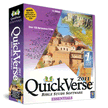
QuickVerse was good software. I used it for a long time, and even purchased the NIV translation and several other add-ons (I honestly don't remember how many translations were available or how many I had, but I do remember there were several to choose from.) I spent many hours looking up Strong's definitions, doing word studies, and generally having a great time with QuickVerse. Later on a book format called STEP was developed, and Bible-related books in STEP format are still there to be found out on the Internet. I stuck with QuickVerse into the era of CD-ROMs; I still have my CDs of an old version. QuickVerse is still going strong today, with multiple editions available. I haven't used the latest incarnations, but it served me well for many years.
The next Bible software that I came across was much cheaper than QuickVerse. It was free! e-Sword is world-class Bible software at below-the-bargain-basement pricing. Rick Meyers, the software's author (and, incidentally, father of Christian Rock artist Krystal Meyers), gives it away for free for no other reason than that he wants to share the Word with others. e-Sword is amazing software; I've recommended it to many people. There are 20+ translations available for free, and 15+ more available for purchase at a nominal fee; you can view and search Hebrew and Greek definitions, Bible (and otherwise) dictionaries, commentaries, and your own user-generated notes. There are even devotionals and maps to download! The software is easy to use, and if you don't have Bible software and aren't ready to invest in a retail package, give e-Sword a download. It might be everything you need and more that you ever dreamed of, or it might even whet your appetite for something more! e-Sword provides the basics of Bible study software. It's not fancy, but it works well and as advertised.
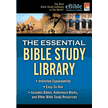
The first couple of copies of the ESV Bible that I bought had postcards in them for a free Bible software package. This software was called Libronix, and was related to a Bible package I had heard of but never tried called Logos. Libronix/Logos provides some pretty amazing tools; you can search for words or topics, or you can generate instant word studies and exegetical guides, or you can pull up several pages of information related to whatever passage you are studying. Within seconds you can literally generate as much information as would have taken a Bible School student a whole day to find 20 years ago. The quality and quantity of information is astounding. A far cry from spending 45 minutes swapping floppy disks to find all the times the King James Version uses the word "love"! The postcards still come free with some new ESV Bible purchases (although I didn't get one when I bought my ESV Study Bible), and the software CD itself comes with some other Bible purchases (The NKJV Study Bible, for example). There are other inexpensive entry-level packages that feature Libronix (like the Essential Bible Study Library, pictured at left); the Logos software packages are fairly high-end and expensive, but that's because they are positively packed with resources. It's great software to check out!
Almost a year and a half ago, I heard about some new Bible software coming out called, simply, "Glo." I looked into the software, and became so interested that I actually blogged about it before it was even released! Since then I have had a chance to try out the software, and it is genuinely revolutionary. That old post has some demo videos embedded that will truly knock your socks off, and the actual experience is just as exciting (and, dare I say it, FUN!) as the videos would lead you to expect. Since its release it has seen frequent updates, which is always nice to see (look back at the Godspeed part of this post for an example of what happens when Bible software is left alone without being updated!) It's even being ported to the Mac and to tablet devices like the iPad. If I had a computer capable of running it, Glo would be the main Bible software on my desktop... unfortunately, it requires a dual-core processor to run smoothly, and my home machine doesn't have that kind of horsepower (it's an older model; if you've bought yours in the past few years, it probably can handle it). I have a copy of it sitting on my bookshelf collecting dust until I get a new computer!

While I was writing this blog post, I installed e-Sword to refresh my memory of what it's like, but besides that I don't actually have any Bible software installed. Why is that? Because online Bible software has just become so darn awesome! Here are a few of my favorite online Bible sites:
BibleGateway.com - this is my go-to Bible site, particularly for viewing multiple translations (I mentioned it in my post about Bible translations last week, in fact). With 25+ translations in English, it's very easy to use for translation comparisons. It's also very link-friendly, so if you want to tweet a Scripture verse or passage, or email a friend a link, or post on Facebook... Bible Gateway is very easy to use. They are currently beta-testing the new version of their site; find that beta version here.
Blue Letter Bible - this oddly-named site is also oddly-designed, but once you get used to the weird "K-C-L-I-V-D" buttons, you will discover some fairly deep information. I use it all the time for Greek/Hebrew tools... it's my favorite place online for drilling down to the Strong's definition, and then spreading back out to find all of the places where that word is used in the original texts.
BibleStudyTools.com - another great multi-translation site. I used to use this one from time to time, but I find most of what I need on Bible Gateway or Blue Letter Bible, so it's not high in my bookmark priority list. But it's absolutely a great site to try out.
The makers of Logos and e-Sword actually have their own online Bible sites. Take a look at Bible.Logos.com or e-Sword LIVE to see what they've got!
Several years ago, the publishers of the ESV Bible began to make the full contents of their study Bibles available online. The first one I remember being that way was the ESV Literary Study Bible; there was a limited preview period, then you could pay a small fee to have your access continue indefinitely (their shopping cart has been broken for some time, so presumably the online access purchase option wasn't terribly popular). The Literary Study Bible doesn't particularly have a lot of study notes; it's primarily oriented toward book and section introductions, and lets the text mostly speak for itself. Because it's more about reading straight through than pinpointing a particular verse, I don't find digital access very useful (I own a paper copy), but you might. It's free to try out, anyway.
The next online study Bible I heard of was the ESV Study Bible. It was published simultaneously in bookstores and online, and if you bought a physical copy you also got a code you could use to access the online copy, which contains all of the same materials that are in the one on your bookshelf. The original site has been upgraded and now the ESV Study Bible Online lives at ESVonline.org. (I actually wish they would roll the Literary Study Bible site into this one too; it might give new life to that LSB material to have it on an upgraded platform.)
About four months ago I was at my local Christian bookstore looking for a demo copy of the HCSB Study Bible when I saw a sticker on one of them that said something along the lines of "Visit MyStudyBible.com!" I wrote the site name down and looked it up when I got home, and to my surprise, the site contains, and will always contain absolutely free, all of the material from the HCSB Study Bible! ESVonline.org and MyStudyBible.com have a lot in common, and they're both terrific study Bibles, so I would highly recommend both sites. I blogged about MyStudyBible.com here.
But what about when you're not at your computer? Well, there are tons of Bible apps out there for your cell phone, and there are online sites that have mobile versions, but I'll just mention the app that I consider the cream of the crop: YouVersion.

Are digital Bibles making paper Bibles obsolete? Are online Bibles edging out Bible software? Is mobile the way of the future? Well, I'd say that computerized Bibles have made Bible study much quicker and easier, and mobile Bible offerings have made it much easier to read the Bible wherever you are, but I think there is still a place for physical Bibles, and for computer Bibles, and for mobile. To me, the mobile offerings are about convenience, while computer Bible study tools (online or installed software) are best for fast but still in-depth study, and physical Bibles are best just for the sheer joy of reading. I think each is a different experience, just like listening to the Bible on an audio CD is different from reading it yourself. But it's all the Word of God, and I think it's great to have many ways to access it! It's wonderful to live in a time in history when there are so many ways to hide the Word in your heart. Hide it today!
If you're interested in purchasing some Bible software, ChristianBook.com's Bible software store is a good place to start looking!
Friday, February 4, 2011
The Best Bible Translation ...Bible series, part 3 of 6
In my last post I talked a lot about why there are different translations of the Bible into English. Today I wanted to share some of my thoughts about several of the most popular translations available; you can actually find a list of the best-selling Bible translations right here. I'm not intimately familiar with all ten of them, but it so happens that the top six or seven (as of this month) are the ones I want to talk about anyway!
Keep in mind that there are tons of wonderful Bible sites out there where you can test-drive any translation, compare it to one you're already familiar with, that kind of thing. One of the best of these sites is BibleGateway.com, which has about 25 versions in English (depending on whether you count slightly different versions of the NIV as different translations). All of the translations I will mention today are available there. Next week I'll talk more about online Bible reading/study sites, but today I want to talk about the Bible translations themselves. I'm not going to give you a bunch of history on each; you can visit Wikipedia or other sites for that (I'll provide a few links). I'm just going to give my general impressions on each translation, and you can go from there.
King James Version
Wikipedia - Bible Gateway
I talked a lot about the King James Version in my last post; I won't repeat those details today. It's a beautiful, well-respected, accurate translation, and I would never dream of discouraging anyone from using it. For hundreds of years, millions of people have considered it THE Word of God. In fact, if you search Google for about ten seconds, you'll be able to find Web sites run by people who believe it is the only legitimate Bible translation in English. Best quip ever about the KJV: "If the King James Bible was good enough for the Apostle Paul, it's good enough for me!"
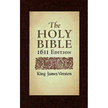
The KJV is considered a very literal translation; highly recommended if you're not afraid of the old-timey sentence structure. In fact, some of the things that seem like archaisms (the usage of "thee," "thy," "thou," and so on in addition to "you," for example) are not archaisms but conscious choices by the translators to make it more literal (in standard English, "you" can be either singular or plural; in KJV usage, "thou" is singular and "you" is plural). Despite language that is sometimes clunky by "front page of the New York Times" standards, the King James Version is of high quality and highly respected. It's worth your time.
New International Version
Official - Wikipedia - Bible Gateway
The NIV was almost the only Bible translation that I read for a good decade or more of my life. The English is clear, easy to understand, and for the most part, quite accurate. I have no idea how many times over the years that I heard a minister, preaching from the KJV, correct the translation to what I was looking at in my NIV, but the number is a big one. I even think it could be used from the pulpit; at this point, many Christians are as familiar with the NIV as they are with the KJV. I especially love the Psalms in the NIV; they seem quite musical to me. Over the years, though, the NIV has suffered from some criticism over certain verses, and that plus changes in the English language over the years were reasons for the attempt at releasing an updated NIV called Today's New International Version several years ago, and the new revision of the NIV which is available for reading online right now and which will be released in bookstores this year. To compare the classic 1984 NIV, the 2005 Today's NIV, and the upcoming 2010 revision, visit this page at BibleGateway.com.
The New International Reader's Version deserves a separate mention. This is a revision of the NIV designed for beginning readers. Basically, they simplified the more complex vocabulary, and they cut longer sentences into shorter ones. It's a good translation for young children who are just learning to read, but they will likely grow out of it quickly. One of the ironies of the NIrV Bible we bought for my son when he was five years old (read about that here) was that the dramatized "Bible stories" scattered throughout the text actually were harder to read than the text itself.
New King James Version
Official - Wikipedia - Bible Gateway
If you've ever heard a minister who was reading from the King James Bible but modifying the language on the fly to make it sound a little more "modern," that's a little bit like what you'll get with the New King James Version. The idea was to modernize the language of the classic KJV while still retaining some of the timeless qualities of that translation. I've used NKJV quite a bit myself (although it is not currently one of my actively-used translations) and enjoy and respect it very much. This is the translation my pastor generally uses when he is preaching. The only criticism I have of the NKJV is that the translators used (more or less) the same ancient texts as the translators of the original KJV had used back in the 1600s, which means that improvements in Bible manuscript scholarship since that time were not a big part in the translating process. Ironically, the NKJV has been soundly rejected by those KJV-only folks, even though the KJV they hold in their hands is quite a bit different from the KJV delivered to King James himself centuries ago! The KJV we read today is actually a "new" version of the KJV. If you ever have a chance to spend some time with an actual copy of the 1611 KJV, read a few chapters and then thank your lucky stars that it was re-edited and modernized over time! You would expect the KJV-only folks to have been the biggest supporters of the NKJV, but they apparently hate it.
Use the NKJV if you just like the KJV but want something written in a less-archaic style. Or, use it if your pastor reads from KJV and you can't follow what it means! Your NKJV will be essentially the same in most cases, but you'll be able to understand it better. It will be a little bit like reading captions while listening to someone speaking English with a heavy foreign accent.
English Standard Version
Official - Wikipedia - Bible Gateway
Years ago, the announcement of Today's New International Version translation created a controversy in some Christian circles. The uproar was over something called "gender-neutral" Bible translation. Basically, there are places in the original Bible texts where masculine pronouns are used in a non-gender-specific way. An English equivalent would be the word "mankind," which very rarely only refers to men but usually refers to men and women, the whole human race. An example from the Bible might be when Jesus said "Man shall not live by bread alone," not meaning that only men should depend on the Word of God but that all people should depend on the Word of God. A "gender-neutral" translation might render this phrase "a person does not live by bread alone." This may seem like hair-splitting; the pro-gender-neutrality people would say "That's what the original text means!" and the anti-gender-neutrality people would say "But it's not what the original text says, and people aren't so stupid that you have to rewrite the Bible so they can figure out the pronouns." In 1997, representatives of a number of ministries came together in Colorado Springs, Colorado, and drafted a set of "guidelines" for gender usage in Bible translation. These are known as the Colorado Springs Guidelines, and you can read them here.
The ESV was among the first translations (maybe the first translation) that consciously sought to adhere to these guidelines. The ESV calls itself an "essentially literal" translation, and like the NKJV it seeks to retain the literary beauty present in the KJV, but the ESV uses the latest textual scholarship available at the time of its translation. The ESV is currently my favorite translation for reading and for study, and it is the translation I generally use on this blog and on the related Web site, ScriptureMenu.com. This year (and last year) I'm reading the Bible cover to cover from the ESV Study Bible and the NIV Study Bible, and there have been several times where the NIV Study Bible notes said things like "The same word is used to translate this word and this word in the original texts," and the NIV translates it with two different words but the ESV translates it using the same word. The ESV is sometimes not as fluid to read as the NIV or some other modern translations, but it is not nearly as difficult to absorb as the KJV or the NASB or other literal translations, and I actually like the fact that my brain is forced to engage when I'm reading it. And there are places, particularly in poetic sections like the Psalms and Isaiah, where the ESV preserves powerful metaphors that other translations gloss over.
The ESV is a great translation to have available to you. Make sure you keep one handy, and bookmark ESVonline.org to read it online.
Holman Christian Standard Bible
Official - Wikipedia - Bible Gateway
In the past year or so I have gained a growing respect and liking for the Holman Christian Standard Bible. It seems to me to have a fluid style like the NIV, but it leans a bit more to the literal side of the equation than NIV. My perception is that its fidelity to the original texts is a notch better than the NIV, but readability was not sacrificed for the sake of accuracy. I'm not sure I would recommend the ESV for young children to read, but I think they could handle the HCSB. By way of making a very subjective, emotional comparison, I would classify the ESV as "majestic," the NIV as "friendly" or maybe "non-threatening," and the HCSB as "warm" and "inviting." Any of the three is a good read; all three are currently favorites of mine.
Have an HCSB on your shelf, and bookmark MyStudyBible.com to read the HCSB Study Bible for free!
New American Standard Bible
Official - Wikipedia - Bible Gateway
Just over a year ago, I won a beautiful, and rather expensive, edition of the New American Standard Bible in an online contest. I actually have a little cheap paperback New Testament on my shelf in the NASB translation, but I can't say I've ever spent any time with it. And to be honest, I was hoping to win a nice ESV in the contest! But this Bible is so beautiful that I've been carrying the huge black thing to church every week ever since. Hopefully people don't think I'm carrying a big Bible to impress them! I'm absolutely not. It's a beautiful Bible, and it's a wonderful translation, with some rather surprising features.
The NASB has an interesting lineage. I mentioned before that the 1611 KJV was revised and modernized to what we now use; this revision, made in the 1880s, is called the "Revised Version." In 1901, a revision of the RV called the American Standard Version was released, and in the 1960s and 1970s this ASV was once again revised and released as the NASB. The NASB you are most likely to find in a Bible bookstore is the 1995 revision of this; this is the one I won in the contest. My paperback NASB New Testament is the earlier version. (The ESV is actually a revision of the Revised Standard Version, which is a revision of the ASV, so the two translations are related.)
The NASB is probably the most literal mainstream translation on the market; I find the sentence structure a bit clunky at times, but in general I like it a lot. And as I mentioned, there are a couple of very unique features of the translation, specifically in the New Testament. One thing I find very useful and interesting is that Old Testament quotations in the New Testament are printed in ALL CAPS, so they stand out clearly. This is actually more revealing than you might think, because not every quotation of the OT in the NT is clearly indicated as a quote by the OT authors. It's very interesting to run across the "hidden" ones that would have already jumped out to a Jewish reader. My other favorite feature in the NASB NT is that on occasion, verbs are marked with an asterisk: "*". The asterisk means that the Greek text actually uses a present tense verb in a spot where the English translation uses past tense; the authors used present tense to make the narrative seem more immediate. In formal English we don't switch verb tenses midstream, but it's not unheard-of in colloquial usage: "So I left my apartment and got to the laundromat, and I'm putting my clothes in the washer, and this lady says to me..." I doubt that knowing when one of those tense shifts has occurred will ever provide a deep spiritual insight, but I think it's fascinating to know about it.
New Living Translation
Official - Wikipedia - Bible Gateway
I haven't yet had a chance to really spend a lot of time in this translation, but what little I've read of it, I really liked. The original intention was to create a revision of The Living Bible, a paraphrase written in the 1960s, but eventually it was decided to create a new translation from the original texts. Although it is not as free with the text as an actual paraphrase, the NLT uses the "thought-for-thought" translation philosophy, which makes it easier to read but potentially less accurate at expressing shades of meaning. I did some side-by-side comparison with an ESV recently, and although I did spot the occasional difference that bothered me a little, overall I would consider it trustworthy for reading; for heavy study I would recommend something closer to the "word-for-word" end of the scale. That said, I have a NLT Life Application Bible sitting on my shelf, and I look forward to delving into it in the near future.
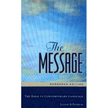
The Message
Official - Wikipedia - Bible Gateway
I'll be straight with you: I'm not a fan of The Message Bible. It is considered a paraphrase, not a translation, although it was paraphrased directly from the original languages (as opposed to the original Living Bible, which was paraphrased from the 1901 ASV). There is no effort to match the vocabulary or sentence structure of the original text or other translations; in fact, most editions don't even bother with chapter and verse numberings. The idea is to be almost like a novelization of the Bible. The language is fresh and immediate and colloquial, and it's certainly fun to read, but I don't feel like I'm reading a Bible when I read it; sometimes it almost feels like a parody of the Bible to me. However, I have friends that I respect very much who enjoy reading The Message, and as long as you don't assume that it's something that it's not, I think it's great if it gets people interested in what God's Word has to say.
Bible Translation Continuum
I mentioned before that there is sort of a continuum for Bible translations, with the most "literal" or "word-for-word" translations on one end, and the most "dynamic" or "thought-for-thought" translations at the other end. You could arrange these eight translations roughly in this order, starting with the most "literal" and ending with the most "dynamic":
But you don't have to choose just one; if you look around you can find "parallel Bibles" with two, four, or even more of these translations in them, side-by-side for comparison. The most interesting one I've seen is a The Message/NASB Parallel Bible which, with texts from exact opposite ends of the continuum above, must quiver while you hold it, ready to spontaneously split at any moment! But in all seriousness, if you want to carry several texts with you, there are some really good parallel Bibles out there. I'm kind of partial to this one, myself. We'll talk about electronic Bibles in an upcoming post (and I've already mentioned the Bible Gateway), so comparing translations has actually become quite a bit easier in recent years, but sometimes it helps to just have a couple of translations right on the table in front of you.
Again: which one is best? The "read" Bible is the best. Get one of them, and make sure you've "read" it! The Word of God in a book has the power to prop open a door; the Word of God in your heart has the power to transform lives.
Keep in mind that there are tons of wonderful Bible sites out there where you can test-drive any translation, compare it to one you're already familiar with, that kind of thing. One of the best of these sites is BibleGateway.com, which has about 25 versions in English (depending on whether you count slightly different versions of the NIV as different translations). All of the translations I will mention today are available there. Next week I'll talk more about online Bible reading/study sites, but today I want to talk about the Bible translations themselves. I'm not going to give you a bunch of history on each; you can visit Wikipedia or other sites for that (I'll provide a few links). I'm just going to give my general impressions on each translation, and you can go from there.
King James Version
Wikipedia - Bible Gateway
I talked a lot about the King James Version in my last post; I won't repeat those details today. It's a beautiful, well-respected, accurate translation, and I would never dream of discouraging anyone from using it. For hundreds of years, millions of people have considered it THE Word of God. In fact, if you search Google for about ten seconds, you'll be able to find Web sites run by people who believe it is the only legitimate Bible translation in English. Best quip ever about the KJV: "If the King James Bible was good enough for the Apostle Paul, it's good enough for me!"
The KJV is considered a very literal translation; highly recommended if you're not afraid of the old-timey sentence structure. In fact, some of the things that seem like archaisms (the usage of "thee," "thy," "thou," and so on in addition to "you," for example) are not archaisms but conscious choices by the translators to make it more literal (in standard English, "you" can be either singular or plural; in KJV usage, "thou" is singular and "you" is plural). Despite language that is sometimes clunky by "front page of the New York Times" standards, the King James Version is of high quality and highly respected. It's worth your time.
New International Version
Official - Wikipedia - Bible Gateway
The NIV was almost the only Bible translation that I read for a good decade or more of my life. The English is clear, easy to understand, and for the most part, quite accurate. I have no idea how many times over the years that I heard a minister, preaching from the KJV, correct the translation to what I was looking at in my NIV, but the number is a big one. I even think it could be used from the pulpit; at this point, many Christians are as familiar with the NIV as they are with the KJV. I especially love the Psalms in the NIV; they seem quite musical to me. Over the years, though, the NIV has suffered from some criticism over certain verses, and that plus changes in the English language over the years were reasons for the attempt at releasing an updated NIV called Today's New International Version several years ago, and the new revision of the NIV which is available for reading online right now and which will be released in bookstores this year. To compare the classic 1984 NIV, the 2005 Today's NIV, and the upcoming 2010 revision, visit this page at BibleGateway.com.
The New International Reader's Version deserves a separate mention. This is a revision of the NIV designed for beginning readers. Basically, they simplified the more complex vocabulary, and they cut longer sentences into shorter ones. It's a good translation for young children who are just learning to read, but they will likely grow out of it quickly. One of the ironies of the NIrV Bible we bought for my son when he was five years old (read about that here) was that the dramatized "Bible stories" scattered throughout the text actually were harder to read than the text itself.
New King James Version
Official - Wikipedia - Bible Gateway
If you've ever heard a minister who was reading from the King James Bible but modifying the language on the fly to make it sound a little more "modern," that's a little bit like what you'll get with the New King James Version. The idea was to modernize the language of the classic KJV while still retaining some of the timeless qualities of that translation. I've used NKJV quite a bit myself (although it is not currently one of my actively-used translations) and enjoy and respect it very much. This is the translation my pastor generally uses when he is preaching. The only criticism I have of the NKJV is that the translators used (more or less) the same ancient texts as the translators of the original KJV had used back in the 1600s, which means that improvements in Bible manuscript scholarship since that time were not a big part in the translating process. Ironically, the NKJV has been soundly rejected by those KJV-only folks, even though the KJV they hold in their hands is quite a bit different from the KJV delivered to King James himself centuries ago! The KJV we read today is actually a "new" version of the KJV. If you ever have a chance to spend some time with an actual copy of the 1611 KJV, read a few chapters and then thank your lucky stars that it was re-edited and modernized over time! You would expect the KJV-only folks to have been the biggest supporters of the NKJV, but they apparently hate it.
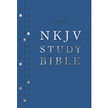
Use the NKJV if you just like the KJV but want something written in a less-archaic style. Or, use it if your pastor reads from KJV and you can't follow what it means! Your NKJV will be essentially the same in most cases, but you'll be able to understand it better. It will be a little bit like reading captions while listening to someone speaking English with a heavy foreign accent.
English Standard Version
Official - Wikipedia - Bible Gateway
Years ago, the announcement of Today's New International Version translation created a controversy in some Christian circles. The uproar was over something called "gender-neutral" Bible translation. Basically, there are places in the original Bible texts where masculine pronouns are used in a non-gender-specific way. An English equivalent would be the word "mankind," which very rarely only refers to men but usually refers to men and women, the whole human race. An example from the Bible might be when Jesus said "Man shall not live by bread alone," not meaning that only men should depend on the Word of God but that all people should depend on the Word of God. A "gender-neutral" translation might render this phrase "a person does not live by bread alone." This may seem like hair-splitting; the pro-gender-neutrality people would say "That's what the original text means!" and the anti-gender-neutrality people would say "But it's not what the original text says, and people aren't so stupid that you have to rewrite the Bible so they can figure out the pronouns." In 1997, representatives of a number of ministries came together in Colorado Springs, Colorado, and drafted a set of "guidelines" for gender usage in Bible translation. These are known as the Colorado Springs Guidelines, and you can read them here.
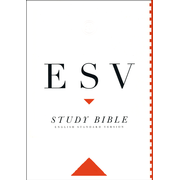
The ESV was among the first translations (maybe the first translation) that consciously sought to adhere to these guidelines. The ESV calls itself an "essentially literal" translation, and like the NKJV it seeks to retain the literary beauty present in the KJV, but the ESV uses the latest textual scholarship available at the time of its translation. The ESV is currently my favorite translation for reading and for study, and it is the translation I generally use on this blog and on the related Web site, ScriptureMenu.com. This year (and last year) I'm reading the Bible cover to cover from the ESV Study Bible and the NIV Study Bible, and there have been several times where the NIV Study Bible notes said things like "The same word is used to translate this word and this word in the original texts," and the NIV translates it with two different words but the ESV translates it using the same word. The ESV is sometimes not as fluid to read as the NIV or some other modern translations, but it is not nearly as difficult to absorb as the KJV or the NASB or other literal translations, and I actually like the fact that my brain is forced to engage when I'm reading it. And there are places, particularly in poetic sections like the Psalms and Isaiah, where the ESV preserves powerful metaphors that other translations gloss over.
The ESV is a great translation to have available to you. Make sure you keep one handy, and bookmark ESVonline.org to read it online.
Holman Christian Standard Bible
Official - Wikipedia - Bible Gateway
In the past year or so I have gained a growing respect and liking for the Holman Christian Standard Bible. It seems to me to have a fluid style like the NIV, but it leans a bit more to the literal side of the equation than NIV. My perception is that its fidelity to the original texts is a notch better than the NIV, but readability was not sacrificed for the sake of accuracy. I'm not sure I would recommend the ESV for young children to read, but I think they could handle the HCSB. By way of making a very subjective, emotional comparison, I would classify the ESV as "majestic," the NIV as "friendly" or maybe "non-threatening," and the HCSB as "warm" and "inviting." Any of the three is a good read; all three are currently favorites of mine.

Have an HCSB on your shelf, and bookmark MyStudyBible.com to read the HCSB Study Bible for free!
New American Standard Bible
Official - Wikipedia - Bible Gateway
Just over a year ago, I won a beautiful, and rather expensive, edition of the New American Standard Bible in an online contest. I actually have a little cheap paperback New Testament on my shelf in the NASB translation, but I can't say I've ever spent any time with it. And to be honest, I was hoping to win a nice ESV in the contest! But this Bible is so beautiful that I've been carrying the huge black thing to church every week ever since. Hopefully people don't think I'm carrying a big Bible to impress them! I'm absolutely not. It's a beautiful Bible, and it's a wonderful translation, with some rather surprising features.
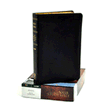
The NASB has an interesting lineage. I mentioned before that the 1611 KJV was revised and modernized to what we now use; this revision, made in the 1880s, is called the "Revised Version." In 1901, a revision of the RV called the American Standard Version was released, and in the 1960s and 1970s this ASV was once again revised and released as the NASB. The NASB you are most likely to find in a Bible bookstore is the 1995 revision of this; this is the one I won in the contest. My paperback NASB New Testament is the earlier version. (The ESV is actually a revision of the Revised Standard Version, which is a revision of the ASV, so the two translations are related.)
The NASB is probably the most literal mainstream translation on the market; I find the sentence structure a bit clunky at times, but in general I like it a lot. And as I mentioned, there are a couple of very unique features of the translation, specifically in the New Testament. One thing I find very useful and interesting is that Old Testament quotations in the New Testament are printed in ALL CAPS, so they stand out clearly. This is actually more revealing than you might think, because not every quotation of the OT in the NT is clearly indicated as a quote by the OT authors. It's very interesting to run across the "hidden" ones that would have already jumped out to a Jewish reader. My other favorite feature in the NASB NT is that on occasion, verbs are marked with an asterisk: "*". The asterisk means that the Greek text actually uses a present tense verb in a spot where the English translation uses past tense; the authors used present tense to make the narrative seem more immediate. In formal English we don't switch verb tenses midstream, but it's not unheard-of in colloquial usage: "So I left my apartment and got to the laundromat, and I'm putting my clothes in the washer, and this lady says to me..." I doubt that knowing when one of those tense shifts has occurred will ever provide a deep spiritual insight, but I think it's fascinating to know about it.
New Living Translation
Official - Wikipedia - Bible Gateway
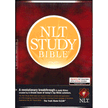
I haven't yet had a chance to really spend a lot of time in this translation, but what little I've read of it, I really liked. The original intention was to create a revision of The Living Bible, a paraphrase written in the 1960s, but eventually it was decided to create a new translation from the original texts. Although it is not as free with the text as an actual paraphrase, the NLT uses the "thought-for-thought" translation philosophy, which makes it easier to read but potentially less accurate at expressing shades of meaning. I did some side-by-side comparison with an ESV recently, and although I did spot the occasional difference that bothered me a little, overall I would consider it trustworthy for reading; for heavy study I would recommend something closer to the "word-for-word" end of the scale. That said, I have a NLT Life Application Bible sitting on my shelf, and I look forward to delving into it in the near future.
The Message
Official - Wikipedia - Bible Gateway
I'll be straight with you: I'm not a fan of The Message Bible. It is considered a paraphrase, not a translation, although it was paraphrased directly from the original languages (as opposed to the original Living Bible, which was paraphrased from the 1901 ASV). There is no effort to match the vocabulary or sentence structure of the original text or other translations; in fact, most editions don't even bother with chapter and verse numberings. The idea is to be almost like a novelization of the Bible. The language is fresh and immediate and colloquial, and it's certainly fun to read, but I don't feel like I'm reading a Bible when I read it; sometimes it almost feels like a parody of the Bible to me. However, I have friends that I respect very much who enjoy reading The Message, and as long as you don't assume that it's something that it's not, I think it's great if it gets people interested in what God's Word has to say.
Bible Translation Continuum
I mentioned before that there is sort of a continuum for Bible translations, with the most "literal" or "word-for-word" translations on one end, and the most "dynamic" or "thought-for-thought" translations at the other end. You could arrange these eight translations roughly in this order, starting with the most "literal" and ending with the most "dynamic":
New American Standard Bible
English Standard Version
King James Version
New King James Version
Holman Christian Standard Bible
New International Version
New Living Translation
The Message
But you don't have to choose just one; if you look around you can find "parallel Bibles" with two, four, or even more of these translations in them, side-by-side for comparison. The most interesting one I've seen is a The Message/NASB Parallel Bible which, with texts from exact opposite ends of the continuum above, must quiver while you hold it, ready to spontaneously split at any moment! But in all seriousness, if you want to carry several texts with you, there are some really good parallel Bibles out there. I'm kind of partial to this one, myself. We'll talk about electronic Bibles in an upcoming post (and I've already mentioned the Bible Gateway), so comparing translations has actually become quite a bit easier in recent years, but sometimes it helps to just have a couple of translations right on the table in front of you.
Again: which one is best? The "read" Bible is the best. Get one of them, and make sure you've "read" it! The Word of God in a book has the power to prop open a door; the Word of God in your heart has the power to transform lives.
"Basic to the Bible's canonical status is its 'inspiration.' This word indicates a divinely effected uniqueness comparable to the uniqueness of the person of the incarnate Lord. As Jesus Christ was totally human and totally divine, so is the Bible." - ESV Study Bible, "Reading the Bible Theologically"
Wednesday, February 2, 2011
Lost in Translations ...Bible series, part 2 of 6
 photo © 2005 Alfonso Surroca | more info (via: Wylio)In my last post I blogged a little bit about why I (and some friends of mine, and I'm sure many Christians above a certain age) have an awful lot of paper Bibles lying around. But why are there so many Bibles in existence at all? Aren't they all the same? Today I thought I would talk about different translations, why they exist, and why you might be interested to see a few different ones.
This year is the 400th anniversary of the King James version of the Bible, which was first released in 1611. It was far from the first translation of the Bible into English. You can pick up some details in this Wikipedia article, but the short version is that even in 1611, there were several English translations of the Bible in existence. The King James Bible is special in a couple of ways, though, and it's worthwhile to look at those.
The KJV is what is known these days as a "literal" translation - the translators tried to stay as close to the actual wording of the original texts. They actually did a very good job; I suspect that's part of the reason that it has been so popular for so long. In fact, the KJV is generally seen as more literal than almost any other mainstream translation today. The KJV is artistically well-done, also; the text has been so admired over the centuries that its language and phrasing have entered deeply into the English language. In the early years of the United States, it was even used for classroom instruction. I consider the KJV a trustworthy translation (certainly, it is better in some ways than many modern translations!), but it does have its shortcomings.
The most obvious of these shortcomings is that it's just plain old hard to understand. We don't speak now the way people spoke English 400 years ago. There are words in the KJV that nobody even uses anymore, and even some words that you and I recognize easily have changed in meaning over time (see this page for some examples). If you are used to it, the KJV is a fluent, beautiful, trustworthy translation. Until you get used to it, it is confusing, wordy, and convoluted.
A second shortcoming is that scholars now understand what the original texts say far better than they did when the KJV was translated. There are words, phrases, and idioms that were not as well understood in 1610 as they are now, due to scholarship, archaeological discoveries of manuscripts that were lost until recently, that sort of thing. There are certain isolated places where the KJV's translation choice is now known to be just plain old wrong. These mistranslations are all minor matters; they are never things that affect the primary message of the Gospel. But the glitches remain, so even if you like the KJV very much (and I know many ministers still preach from it exclusively) it might be good to have a second, more modern translation around for cross-checking.
So, which one should you choose? Well, that boils down mostly to personal preference, but in order to even be clear enough on the differences to develop a preference, you need to understand what I meant by a "literal" translation.
There are two factors that come into play when a new Bible translation is being prepared: readability, and fidelity to the original manuscripts. Both things are taken into consideration during the preparation of every translation, but they are treated with different degrees of priority depending on the mandate of the translators, and every translation of any manuscript (it needn't even be the Bible) can be plotted along a kind of continuum, starting from the "most literal" (greatest fidelity to originals) to the most "dynamic" (easiest to read). I've seen this referred to as "word-for-word" versus "thought-for-thought." The main problem in translating one language into another is that there will be differences in grammar, idioms (things like "caught like a rat in a trap" which to most English-speakers is clear but when translated into another language might be total gibberish), even precisely which words are available (Bible Greek has many words that are usually all translated into English as "love," for example, although they have very different meanings in the Greek... we don't have the range of meaning in the English language to accommodate). A translator attempting a purely "literal" or "word-for-word" translation will try to directly map a Greek or Hebrew word to an English word, and as much as possible, even keep word order and sentence structure intact. A translator attempting a purely "dynamic" or "thought-for-thought" translation will read the text in the original language, figure out what he thinks the original author was trying to communicate, and communicate that same thing in English, not trying to reproduce vocabulary or grammar but trying to generate the same ideas and thoughts in the modern reader's mind that the original might have generated in the mind of a reader contemporary with the author. There is merit in both approaches; a literal translation might be very difficult to read because of awkward grammar, and a dynamic translation may unintentionally misrepresent a passage by adding to or removing from the original shades of meaning, or introducing theological biases of the translator. Both techniques certainly have strengths as well, though, and modern translations seek balance between the two (although occasionally you'll see a version come out that leans very far one way or the other, so make sure you know what you're reading!)
I've done some reading about the process of creating translations of the Bible for groups who do not have a Bible in their native tongue. Some people groups are multilingual, and there may be one in a language they understand (for example, a group may have an aboriginal language in which there is no Bible translation, but they may also understand French or Swahili, languages which have Bible translations already). But it means a great deal to those people groups when someone translates the Bible into their "heart language"... the language of their people, their birth, their home. And I think in some ways, choosing a Bible translation for your personal use is a matter of finding the one that's in your "heart language," even though all of them are already in English. If you can find a Bible that you know you can trust (because you're aware of the methods used by the translators) and which speaks to you when you read it, that's a good translation to claim as your own. Through the centuries, millions have chosen the King James as their own; through the past few decades, many thousands more have chosen the NIV as the translation that speaks to them. I'll discuss even more good modern translations in my next post. You may find a translation that speaks to you even better than any that I'll mention. The point is that you find a Bible that you want to open up and explore. As I said in my previous post, the only good Bible is a "read" Bible, so find one that you can say you have "read." Put yourself in a place where God can speak to your heart, and God will speak, and trust me, your life will never be the same!
Friday, November 5, 2010
New NIV Translators' Notes
I just read the Translators' Notes for the new revision of the NIV (PDF), and I had a couple of thoughts.
It struck me as odd that the notes seem to imply that the King James Version was the first translation of the Bible into English. That is FAR from the case, as even a quick look at Wikipedia's entry for the KJV shows. Over 200 years before the KJV, John Wycliffe made the first-ever translation of the Bible into English; William Tyndale did it 100 years after that, and there were several revisions of that translation before the KJV was undertaken. If you look at the first pages of your King James Bible, you will probably find the phrase "with the former Translations diligently compared and revised" right there. The notes aren't trying to mislead anyone; it just struck me as odd that all that history was glossed over so completely.
I did like the terms "transparency" and "comprehensibility" used to describe "formal equivalence" and "dynamic equivalence", respectively. "Formal equivalence" seeks "transparency" to the original texts (meaning, trying to make the English closely match the way the text was originally written), while "dynamic equivalence" seeks "comprehensibility" by re-wording sentences and even whole paragraphs so that the train of thought is clear to a modern English-speaker. (The other terms I've heard for it are "word-for-word" vs. "thought-for-thought")
The NIV seeks to be somewhere in the middle, and I think in general it does a good job. I've come to prefer translations like the ESV that are a little closer to the "transparency" end of the spectrum, but it occurs to me that maybe a good Bible strategy is to have at least one "dynamic equivalent" Bible (the NIV is a good choice, or the HCSB) for times when you are just reading through the Bible, and at least one "formal equivalent" Bible for more intense study times.
The examples of changes in the new NIV that are outlined in the document look pretty good to me overall... it will be interesting to see whether this new NIV gains traction!
It struck me as odd that the notes seem to imply that the King James Version was the first translation of the Bible into English. That is FAR from the case, as even a quick look at Wikipedia's entry for the KJV shows. Over 200 years before the KJV, John Wycliffe made the first-ever translation of the Bible into English; William Tyndale did it 100 years after that, and there were several revisions of that translation before the KJV was undertaken. If you look at the first pages of your King James Bible, you will probably find the phrase "with the former Translations diligently compared and revised" right there. The notes aren't trying to mislead anyone; it just struck me as odd that all that history was glossed over so completely.
I did like the terms "transparency" and "comprehensibility" used to describe "formal equivalence" and "dynamic equivalence", respectively. "Formal equivalence" seeks "transparency" to the original texts (meaning, trying to make the English closely match the way the text was originally written), while "dynamic equivalence" seeks "comprehensibility" by re-wording sentences and even whole paragraphs so that the train of thought is clear to a modern English-speaker. (The other terms I've heard for it are "word-for-word" vs. "thought-for-thought")
| formal equivalence | word-for-word | transparency | NASB, ESV |
| dynamic equivalence | thought-for-thought | comprehensibility | The Living Bible, The Message |
The NIV seeks to be somewhere in the middle, and I think in general it does a good job. I've come to prefer translations like the ESV that are a little closer to the "transparency" end of the spectrum, but it occurs to me that maybe a good Bible strategy is to have at least one "dynamic equivalent" Bible (the NIV is a good choice, or the HCSB) for times when you are just reading through the Bible, and at least one "formal equivalent" Bible for more intense study times.
The examples of changes in the new NIV that are outlined in the document look pretty good to me overall... it will be interesting to see whether this new NIV gains traction!
Wednesday, October 6, 2010
HCSB Study Bible Online
I've been looking at a new Bible Web site. It's pretty great stuff! But before I point you that way, let me give you a quick run-down of how I found it.
Mostly on this blog I talk about the ESV, but I've gained a great deal of respect for the HCSB as a kind of more-literal NIV. I'm also a Certified Study Bible Junkie. So when I recently saw an ad for the new Holman Christian Standard Bible Study Bible, I immediately was interested. Here's a video of some of the features of the paper HCSB Study Bible:
So anyway, last week I was at a local Christian bookstore looking at the HCSB Study Bibles, and I saw a Web link printed on them: MyStudyBible.com. I wrote it on my built-in note pad (my hand), and when I got home I loaded it up. Turns out it's the new online version of the study Bible... and at least for the time being, it's free! Take a look at what it can do:
Right now the system is in beta testing (the link forwards to http://beta.mystudybible.com), and there's no indication whether Broadman Holman intends for it to be free forever, or to begin to charge for it at some point, so try it out while you can!
At first glance, it appears that they've taken some cues from the online version of the ESV Study Bible. Here's a brief video of that (most of the online videos of the ESV Study Bible are for the older version, which has been superseded by a new iteration, so this is all I've got):
Obvious similarities: two panes (actually, the ESV site defaults to three, but I just use two). Scripture on the left (usually), additional material on the right (usually). Bible verse search box above the left-hand pane, with the Scripture reference you're looking at in light gray text except when you're typing in a new one. The notes follow the Bible text as you scroll. But after that, the similarities end and the feature sets diverge a bit.
One thing I really like about the ESV online study Bible is the "endless scrolling" of the Bible text. When you get to the end of a chapter, the next chapter automatically follows it. The Holman online study Bible doesn't do that. The ESV OSB also has configurable bookmarks and a built-in audio player so you can listen to the Bible text. And the ESV OSB has Bible reading plans built in to give you a framework for your Bible study. The Holman OSB, on the other hand, is heavier on word-study tools; you can turn on links to Strong's definitions directly from the text, and the same information is also available in the right-hand side pane. It also incorporates the Holman Illustrated Bible Dictionary for word definitions, and commentaries such as the Holman New Testament Commentary. It's clear that B&H is building a platform on which they can host a lot of material from their library; the ESV Online Study Bible only contains materials from that one book (although there is a VAST amount of information in that one book, and I've read hints that the architecture of this version of that site is designed so that they can add materials later on). For access to deeper study materials, the HCSB OSB currently has the ESV OSB beat by a landslide. When I've wanted access to Strong's word definitions, I've had to get them at Blue Letter Bible; now I could go to the HCSB OSB instead and find a much slicker interface.
There are some clunky parts left to be ironed out; for example, if you click a "read more" link, the full text of the study note opens automatically in the left-hand pane, right over the Bible text. The Bible text is still there, of course; it's just on a separate tab. But I'd rather see the full text of the note appear in the right-hand pane and not cover the Scripture text. You can move the tabs from pane to pane quite easily, but it strikes me as awkward for it even to happen that way in the first place, especially seeing how much effort they've put into the interface. Maybe that's one of the things that will come out in the wash as they move from beta to release version. On the other hand, things like verse popups when you hover over a cross-reference indicator are much more intuitive on the HCSB OSB site than on the ESV OSB site.
A few more odds and ends: the ESV OSB has a really nice setup for copying verses to paste into something else; I use it all the time for this blog. The esv.to Bible verse linking facility points to the ESV OSB as well, which makes for extremely easy linking from blog posts, Tweets, or anywhere you might want to link to a Bible verse. The HCSB site doesn't seem to have anything like those two features, but on the other hand, the HCSB site also contains the KJV text, and you can even set it as your default if you like.
The ESV online study Bible is a pay service; access to the Bible text is always free, but access to the study notes is $19.95, or free to anyone who purchases a hard copy of the ESV Study Bible. Currently the HCSB Online Study Bible is completely free, andI wasn't able to find any indication that they plan to charge for it in the future (see update at the bottom of this post), but I can't imagine a publisher simply giving away all of the resources they're putting out there. My guess is that the free access is a beta testing/generating buzz thing which will eventually lead to a pay service, much like Crossway gave away access to the ESV OSB for a bit back when it was brand new. I'd say if access to this new Holman site is in that same $20 range, and if it includes even only the study resources you can see today, that's a pretty amazing bargain. The HCSB text + Study Bible notes & cross-references + Strong's definitions + Bible dictionaries + a whole shelf full of commentaries = quite a value, even at a much higher cost. The link on The HCSB Study Bible site says that MyStudyBible.com contains "more than $200 in free resources" and I totally believe it. I'm looking forward to spending a little more time with the HCSB Study Bible notes to see how much I like the content, but the site is feature-rich and the materials look very useful. I think it's a great start for a new Bible Web site.
A list of HCSB Study Bibles you can buy
The official site of the HCSB translation
UPDATE: After I wrote this post, I found this in the site's FAQ:
Mostly on this blog I talk about the ESV, but I've gained a great deal of respect for the HCSB as a kind of more-literal NIV. I'm also a Certified Study Bible Junkie. So when I recently saw an ad for the new Holman Christian Standard Bible Study Bible, I immediately was interested. Here's a video of some of the features of the paper HCSB Study Bible:
So anyway, last week I was at a local Christian bookstore looking at the HCSB Study Bibles, and I saw a Web link printed on them: MyStudyBible.com. I wrote it on my built-in note pad (my hand), and when I got home I loaded it up. Turns out it's the new online version of the study Bible... and at least for the time being, it's free! Take a look at what it can do:
Right now the system is in beta testing (the link forwards to http://beta.mystudybible.com), and there's no indication whether Broadman Holman intends for it to be free forever, or to begin to charge for it at some point, so try it out while you can!
At first glance, it appears that they've taken some cues from the online version of the ESV Study Bible. Here's a brief video of that (most of the online videos of the ESV Study Bible are for the older version, which has been superseded by a new iteration, so this is all I've got):
Obvious similarities: two panes (actually, the ESV site defaults to three, but I just use two). Scripture on the left (usually), additional material on the right (usually). Bible verse search box above the left-hand pane, with the Scripture reference you're looking at in light gray text except when you're typing in a new one. The notes follow the Bible text as you scroll. But after that, the similarities end and the feature sets diverge a bit.
One thing I really like about the ESV online study Bible is the "endless scrolling" of the Bible text. When you get to the end of a chapter, the next chapter automatically follows it. The Holman online study Bible doesn't do that. The ESV OSB also has configurable bookmarks and a built-in audio player so you can listen to the Bible text. And the ESV OSB has Bible reading plans built in to give you a framework for your Bible study. The Holman OSB, on the other hand, is heavier on word-study tools; you can turn on links to Strong's definitions directly from the text, and the same information is also available in the right-hand side pane. It also incorporates the Holman Illustrated Bible Dictionary for word definitions, and commentaries such as the Holman New Testament Commentary. It's clear that B&H is building a platform on which they can host a lot of material from their library; the ESV Online Study Bible only contains materials from that one book (although there is a VAST amount of information in that one book, and I've read hints that the architecture of this version of that site is designed so that they can add materials later on). For access to deeper study materials, the HCSB OSB currently has the ESV OSB beat by a landslide. When I've wanted access to Strong's word definitions, I've had to get them at Blue Letter Bible; now I could go to the HCSB OSB instead and find a much slicker interface.
There are some clunky parts left to be ironed out; for example, if you click a "read more" link, the full text of the study note opens automatically in the left-hand pane, right over the Bible text. The Bible text is still there, of course; it's just on a separate tab. But I'd rather see the full text of the note appear in the right-hand pane and not cover the Scripture text. You can move the tabs from pane to pane quite easily, but it strikes me as awkward for it even to happen that way in the first place, especially seeing how much effort they've put into the interface. Maybe that's one of the things that will come out in the wash as they move from beta to release version. On the other hand, things like verse popups when you hover over a cross-reference indicator are much more intuitive on the HCSB OSB site than on the ESV OSB site.
A few more odds and ends: the ESV OSB has a really nice setup for copying verses to paste into something else; I use it all the time for this blog. The esv.to Bible verse linking facility points to the ESV OSB as well, which makes for extremely easy linking from blog posts, Tweets, or anywhere you might want to link to a Bible verse. The HCSB site doesn't seem to have anything like those two features, but on the other hand, the HCSB site also contains the KJV text, and you can even set it as your default if you like.
The ESV online study Bible is a pay service; access to the Bible text is always free, but access to the study notes is $19.95, or free to anyone who purchases a hard copy of the ESV Study Bible. Currently the HCSB Online Study Bible is completely free, and
A list of HCSB Study Bibles you can buy
The official site of the HCSB translation
UPDATE: After I wrote this post, I found this in the site's FAQ:
Will this site and this content always be FREE?
Our current intention is to keep all of the books that are in this BETA site free forever! And we plan to add more free books! Later, we expect that publishers will need to charge for royalty-based books. When we add those royalty-based books, we will let you know how to access them.
Friday, September 10, 2010
Slow & Steady Wins The Race
I knew I was way behind schedule.
Because of some things that happened this year that took a lot of time and emotional energy, I was way behind in my "read the Bible in a year" project. I've been reading study notes from two separate study Bibles for most of the year, but I actually reduced it to only one as I studied Job (to keep from confusing myself too much with alternate takes on that complex book), which I hoped would help me catch up some. It didn't help as much as I had hoped. As I moved into Psalms, I also returned to using both study Bibles, but I thought, the Psalms are short! I can make up some time on this book!
I should have known better! The Psalms are poetry, as everyone knows. And poetry is designed to pack more information, not less, into a smaller amount of space. I think I've actually been moving slower on my way through the Psalms than through other books! Typically, the study Bible notes are at least as long as the text itself, and both the text and the notes are slower going than in the case of narrative just because of the density of thought in the text. I've found myself simultaneously wanting to hurry up and get finished with Psalms, and wanting to curl up and spend even more time with each individual chapter. In particular, the study notes from the NIV Study Bible I'm reading (which are also present in the NASB Study Bible, which I would recommend because of the more literal text) are fabulous for helping you see the unity of the Psalms as a book (or, rather, a series of books, because Psalms is internally divided into five major "Books"). I blogged before about some of the things I was learning here, but because I'm trying to make it all the way through, I'm not taking the time I would like with each Psalm. After I've finished reading the whole Bible, I may go back and spend six months or so studying only one Psalm a day!
Having the ESV, which is a pretty literal "formal equivalence" type of translation (meaning that the actual words on the page are quite close to the actual words in the ancient texts), and the NIV, which is fairly literal but still a "dynamic equivalence" type of translation (the thoughts and ideas on the page are quite close to the thoughts and ideas in the ancient texts) both in front of me at the same time has certainly given me a chance to see some of the divergences, even though I am not reading every single word of the NIV. Take these examples from Psalm 68, for example. I've included the King James for reference, and also the NASB, which is a translation that is even more literal than the ESV and which I also have on my bedside table as I study. Each verse shows significant differences across translations, which I've pointed out in comments between verses:
Psalm 68 (excerpt)
In my experience it's unusual to see so many small differences packed so densely, and some of the questions I've asked are hair-splitting differences, but in other cases you can easily see how you might spot or miss part of the sense of the poetry based on which translation you're reading. Study Bible notes will often bring out things like this for you, which is why I'm enjoying my use of the two different study Bibles.
But it certainly makes for slow going, especially in cases where things are densely-packed with meaning, as in the Psalms! I'm really looking forward to the books named after prophets (technically, most of the Old Testament is considered "The Prophets," but I'm talking about the books from Isaiah through the end of the Old Testament), but I don't expect them to be much quicker to get through this way. If I can faithfully keep up this pace, I should be able to finish the last word of the Revelation before the end of the second week of March. Then I'll be getting out another one of my cool Bibles (probably the ESV Literary Study Bible, or maybe my old F. LaGard Smith Narrated Bible, which I've not yet made it all the way through) and experiencing the whole Word of God from a different perspective! I can't wait!
Because of some things that happened this year that took a lot of time and emotional energy, I was way behind in my "read the Bible in a year" project. I've been reading study notes from two separate study Bibles for most of the year, but I actually reduced it to only one as I studied Job (to keep from confusing myself too much with alternate takes on that complex book), which I hoped would help me catch up some. It didn't help as much as I had hoped. As I moved into Psalms, I also returned to using both study Bibles, but I thought, the Psalms are short! I can make up some time on this book!
I should have known better! The Psalms are poetry, as everyone knows. And poetry is designed to pack more information, not less, into a smaller amount of space. I think I've actually been moving slower on my way through the Psalms than through other books! Typically, the study Bible notes are at least as long as the text itself, and both the text and the notes are slower going than in the case of narrative just because of the density of thought in the text. I've found myself simultaneously wanting to hurry up and get finished with Psalms, and wanting to curl up and spend even more time with each individual chapter. In particular, the study notes from the NIV Study Bible I'm reading (which are also present in the NASB Study Bible, which I would recommend because of the more literal text) are fabulous for helping you see the unity of the Psalms as a book (or, rather, a series of books, because Psalms is internally divided into five major "Books"). I blogged before about some of the things I was learning here, but because I'm trying to make it all the way through, I'm not taking the time I would like with each Psalm. After I've finished reading the whole Bible, I may go back and spend six months or so studying only one Psalm a day!
Having the ESV, which is a pretty literal "formal equivalence" type of translation (meaning that the actual words on the page are quite close to the actual words in the ancient texts), and the NIV, which is fairly literal but still a "dynamic equivalence" type of translation (the thoughts and ideas on the page are quite close to the thoughts and ideas in the ancient texts) both in front of me at the same time has certainly given me a chance to see some of the divergences, even though I am not reading every single word of the NIV. Take these examples from Psalm 68, for example. I've included the King James for reference, and also the NASB, which is a translation that is even more literal than the ESV and which I also have on my bedside table as I study. Each verse shows significant differences across translations, which I've pointed out in comments between verses:
Psalm 68 (excerpt)
| verse | New International | King James | New American Standard | English Standard |
|---|---|---|---|---|
| 4 | Sing to God, sing praise to his name, extol him who rides on the clouds — his name is the LORD— and rejoice before him. | Sing unto God, sing praises to his name: extol him that rideth upon the heavens by his name JAH, and rejoice before him. | Sing to God, sing praises to His name; Lift up a song for Him who rides through the deserts, Whose name is the LORD, and exult before Him. | Sing to God, sing praises to his name; lift up a song to him who rides through the deserts; his name is the LORD; exult before him! |
| Does the Lord ride in "clouds" in "heaven", or in the "desert"? (The latter seems to make better sense in the context of the desert wanderings of Israel later in the Psalm) | ||||
| 5 | A father to the fatherless, a defender of widows, is God in his holy dwelling. | A father of the fatherless, and a judge of the widows, is God in his holy habitation. | A father of the fatherless and a judge for the widows, Is God in His holy habitation. | Father of the fatherless and protector of widows is God in his holy habitation. |
| Is God a "judge" of widows, or a "defender"/"protector"? (In this case, if you've read the book of Judges you know that an Old Testament "judge" was a protector, but the layman may not realize that) | ||||
| 6 | God sets the lonely in families, he leads forth the prisoners with singing; but the rebellious live in a sun-scorched land. | God setteth the solitary in families: he bringeth out those which are bound with chains: but the rebellious dwell in a dry land. | God makes a home for the lonely; He leads out the prisoners into prosperity, Only the rebellious dwell in a parched land. | God settles the solitary in a home; he leads out the prisoners to prosperity, but the rebellious dwell in a parched land. |
| Does God give lonely people "a home", or does He give them "families"? What if the Psalmist meant to imply that God is the "home"? Do they go forth with "singing" or with "prosperity"? Is the land actually "dry"/"parched", or is it simply "sun-scorched"? | ||||
| 7 | When you went out before your people, O God, when you marched through the wasteland, Selah | O God, when thou wentest forth before thy people, when thou didst march through the wilderness; Selah: | O God, when You went forth before Your people, When You marched through the wilderness, Selah. | O God, when you went out before your people, when you marched through the wilderness, Selah |
| Did they march through a "wasteland", or was it a "wilderness"? (Most Christians think of the Exodus account when they hear "wilderness" and that is the reference here, so although "wasteland" is probably more descriptive, "wilderness" evokes a richer picture of what the Psalmist is talking about.) | ||||
| 8 | the earth shook, the heavens poured down rain, before God, the One of Sinai, before God, the God of Israel. | The earth shook, the heavens also dropped at the presence of God: even Sinai itself was moved at the presence of God, the God of Israel. | The earth quaked; The heavens also dropped rain at the presence of God; Sinai itself quaked at the presence of God, the God of Israel. | the earth quaked, the heavens poured down rain, before God, the One of Sinai, before God, the God of Israel. |
| So, did Sinai move or not? | ||||
| 9 | You gave abundant showers, O God; you refreshed your weary inheritance. | Thou, O God, didst send a plentiful rain, whereby thou didst confirm thine inheritance, when it was weary. | You shed abroad a plentiful rain, O God; You confirmed Your inheritance when it was parched. | Rain in abundance, O God, you shed abroad; you restored your inheritance as it languished; |
| Was the inheritance "parched" or simply "weary"? Or did it "languish"? The NASB uses the same word here and in verse 6, but the Hebrew word is not the same, which might lead to a false sense of connection between the two) | ||||
| 10 | Your people settled in it, and from your bounty, O God, you provided for the poor. | Thy congregation hath dwelt therein: thou, O God, hast prepared of thy goodness for the poor. | Your creatures settled in it; You provided in Your goodness for the poor, O God. | your flock found a dwelling in it; in your goodness, O God, you provided for the needy. |
| Who settled there? Was it a "congregation", a bunch of "people", a "flock", or just some "creatures"? ("congregation" and "flock" evoke the idea of the nation of Israel best, because those images are used elsewhere in the Bible) | ||||
| 11 | The Lord announced the word, and great was the company of those who proclaimed it: | The Lord gave the word: great was the company of those that published it. | The Lord gives the command; The women who proclaim the good tidings are a great host: | The Lord gives the word; the women who announce the news are a great host: |
| Was it women who spread the news, or not? Were they at home, or in camp? | ||||
| 12 | "Kings and armies flee in haste; in the camps men divide the plunder. | Kings of armies did flee apace: and she that tarried at home divided the spoil. | "Kings of armies flee, they flee, And she who remains at home will divide the spoil!" | "The kings of the armies—they flee, they flee!" The women at home divide the spoil— |
| Was it men or women who divided the spoils of war? | ||||
| 13 | Even while you sleep among the campfires, the wings of my dove are sheathed with silver, its feathers with shining gold." | Though ye have lien among the pots, yet shall ye be as the wings of a dove covered with silver, and her feathers with yellow gold. | When you lie down among the sheepfolds, You are like the wings of a dove covered with silver, And its pinions with glistening gold. | though you men lie among the sheepfolds— the wings of a dove covered with silver, its pinions with shimmering gold. |
| Were they asleep at campfires, between pots, or between sheepfolds? Evidence that "sheepfolds" may be the best rendering. | ||||
| 14 | When the Almighty scattered the kings in the land, it was like snow fallen on Zalmon. | When the Almighty scattered kings in it, it was white as snow in Salmon. | When the Almighty scattered the kings there, It was snowing in Zalmon. | When the Almighty scatters kings there, let snow fall on Zalmon. |
| Has the snow fallen already, or will it fall in the future, or is it a metaphor and the snow will never fall at all? | ||||
In my experience it's unusual to see so many small differences packed so densely, and some of the questions I've asked are hair-splitting differences, but in other cases you can easily see how you might spot or miss part of the sense of the poetry based on which translation you're reading. Study Bible notes will often bring out things like this for you, which is why I'm enjoying my use of the two different study Bibles.
But it certainly makes for slow going, especially in cases where things are densely-packed with meaning, as in the Psalms! I'm really looking forward to the books named after prophets (technically, most of the Old Testament is considered "The Prophets," but I'm talking about the books from Isaiah through the end of the Old Testament), but I don't expect them to be much quicker to get through this way. If I can faithfully keep up this pace, I should be able to finish the last word of the Revelation before the end of the second week of March. Then I'll be getting out another one of my cool Bibles (probably the ESV Literary Study Bible, or maybe my old F. LaGard Smith Narrated Bible, which I've not yet made it all the way through) and experiencing the whole Word of God from a different perspective! I can't wait!
Subscribe to:
Posts (Atom)

 Posts


