Enter our Bible Contest to win NLT Study Bibles, a Grand Prize trip to Orlando, FL, $250 in resources and more! Plus your vote will help three ministries Give the Word of God to those who desperately need it by generating a donation to Wycliffe Bible Translators, the Dream Center or Oasis International.For all the details, visit the NLT Facebook Page!
Monday, December 20, 2010
NLT Bible Giveaway
Enter this contest to win a copy of the New Living Translation! Here's the scoop:


Saturday, December 11, 2010
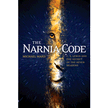
The Narnia Code - Book & DVD
I know I'm in good company when I say that I've loved the Chronicles of Narnia ever since I was a little boy; I'm guessing that a majority of the people reading this probably have similar stories. I was a young teenager when I first discovered them, and I still have my original set of the seven books. I remember being so excited by what most people would consider a clear allegory of Christ's death and resurrection in the first book, and then puzzled when the rest of the books really contained very little that resembled any stories or characters from the Bible. But I loved the books anyway, and as I grew older I read more and more of C.S. Lewis' work... actually, I read everything I could get my hands on, from the Space Trilogy to his amazing works of apologetics to The Screwtape Letters and even a few things he wrote before becoming a Christian. In college I literally read everything by him that they had in the university library.
I've always been so impressed with how methodical and thorough of a thinker Lewis was. That's one reason the Chronicles seem to be a little bit of an anomaly; they seem to be related mostly by the geography of the world of Narnia and the person of Aslan Himself, and frankly, in a few of the books Aslan barely even appears. And then there are other odd things in the books... Father Christmas, for goodness sakes? What's with that? Why would they even know about Christmas in Narnia anyway? I think I basically just sort of wrote those things off, thinking that Lewis was writing the books to entertain children, or maybe just sort of to blow off steam, and that there was not too much rhyme or reason to the whole thing.
That is, I thought that way... until now.
Michael Ward's new book The Narnia Code presents a theory of what holds the books together which rocked my whole concept of the series, and which, to a fan of C.S. Lewis' entire body of work, has a ring of truth to it. When I started reading, you could have colored me intrigued; by the end, you can color me convinced.
Basically, Ward believes that Lewis, who was a professor of medieval literature, used the medieval concept of the universe as a framework for the series. Before Copernicus came along with a whole different idea of the way the universe was organized, it was believed that the Earth was at the center of the universe, and there were seven "planets" that circled around it in concentric orbits (the "planets" were the Moon, Mercury, Venus, the Sun, Mars, Jupiter, and Saturn... our understanding of the moon and sun as different from those other planets didn't appear until a bit later, and planets past Saturn were not discovered until the invention of the telescope). Each of the planets was associated with a mythological deity, and those gods was associated with certain things. Each book is based around the superstitious and mythological concepts surrounding one of these planets/gods. The Lion, the Witch, and the Wardrobe is, for example, the "Jupiter" book, because Jupiter was considered the god of joviality (which explains why when joy begins to return to Narnia as winter breaks, the jolly Father Christmas appears), and Prince Caspian, which is all about war, is based on Mars, who was the god of war. The planets and books line up quite nicely; if you're interested in finding out more details, I'll refer you to the official Web sites at the bottom of this article, and to the book itself (click here to purchase it from ChristianBook.com).
The Michael Ward book itself was, if I understand it correctly, based on the BBC film of the same name (discussed below), and the BBC program was based on Ward's earlier book, Planet Narnia. I have not yet read Planet Narnia (I plan to take a look at it very soon), but my understanding is that it is a more scholarly book, while The Narnia Code is more targeted at the layman. The first few chapters lay out the way Ward came to make his discovery of the link between the books and medieval astronomy, and then it goes straight into explaining the thematic elements of each book, one at a time. I found the initial few chapters a little long for my taste; but once he finally got into the themes of the individual books, I was so hooked! In addition to being a huge fan of C.S. Lewis, I've long been a fan of ancient Greek/Roman mythology, and the connections seem obvious once they're pointed out. It made me want to go back and re-read the Chronicles themselves again, to sort of sniff out the links for myself. The book is an enjoyable read for any fan of the series; you'll want to read it a chapter at a time and digest the information before moving on to the next one.
(For the record, Ward makes it clear, as Lewis did, that the books are most definitely about Jesus Christ; Ward is not trying to say that Aslan is Zeus or anything like that. The idea is that Lewis used the planets and their mythological associations to create the atmosphere for his stories and to point up different aspects of Christ's character, not that Aslan represents a different pagan god in each book.)
Shortly after I read the book, I was at the Christian bookstore near my house, and to my surprise, I spotted the DVD of the BBC program on the shelf! My understanding was that it would not be available until early 2011, but there it was! I snagged a copy and watched it with my family. Surprisingly enough, the DVD contains very little information about the whole "planets" idea; most of it is a biography of Lewis himself. The main program doesn't even give the whole list of "this book matches this planet" associations (although you can find that in the DVD bonus features). I was expecting more about the planets theory, but I found the biography of Lewis interesting and, in a few cases, it even presented information about Lewis that I had not heard before (and I've read quite a bit about Lewis over the years). I enjoyed the DVD just as much as I enjoyed the book, although in a different way; the two complement each other nicely.
If you love the Chronicles of Narnia books, you will at least find The Narnia Code interesting. You may agree with Ward, as I do, or you may think he's a crackpot trying to make a buck off Lewis' legacy, and you may even find the idea that Lewis drew part of his inspiration from stories of pagan gods and goddesses vaguely offensive. But the theory is compelling and the evidence is extensive, and as a Narnia fan, you owe it to yourself to look into these books. It will change the way you see the series forever.
I was provided with a review copy of the book version by Tyndale House Publishers. I purchased the BBC DVD on my own. The opinions expressed in this review are mine alone.
Web links:
My review of Planet Narnia
NarniaCode.com - buy the book - buy the DVD
PlanetNarnia.com - buy the book
MichaelWard.net (the author)
I've always been so impressed with how methodical and thorough of a thinker Lewis was. That's one reason the Chronicles seem to be a little bit of an anomaly; they seem to be related mostly by the geography of the world of Narnia and the person of Aslan Himself, and frankly, in a few of the books Aslan barely even appears. And then there are other odd things in the books... Father Christmas, for goodness sakes? What's with that? Why would they even know about Christmas in Narnia anyway? I think I basically just sort of wrote those things off, thinking that Lewis was writing the books to entertain children, or maybe just sort of to blow off steam, and that there was not too much rhyme or reason to the whole thing.
That is, I thought that way... until now.
Michael Ward's new book The Narnia Code presents a theory of what holds the books together which rocked my whole concept of the series, and which, to a fan of C.S. Lewis' entire body of work, has a ring of truth to it. When I started reading, you could have colored me intrigued; by the end, you can color me convinced.
Basically, Ward believes that Lewis, who was a professor of medieval literature, used the medieval concept of the universe as a framework for the series. Before Copernicus came along with a whole different idea of the way the universe was organized, it was believed that the Earth was at the center of the universe, and there were seven "planets" that circled around it in concentric orbits (the "planets" were the Moon, Mercury, Venus, the Sun, Mars, Jupiter, and Saturn... our understanding of the moon and sun as different from those other planets didn't appear until a bit later, and planets past Saturn were not discovered until the invention of the telescope). Each of the planets was associated with a mythological deity, and those gods was associated with certain things. Each book is based around the superstitious and mythological concepts surrounding one of these planets/gods. The Lion, the Witch, and the Wardrobe is, for example, the "Jupiter" book, because Jupiter was considered the god of joviality (which explains why when joy begins to return to Narnia as winter breaks, the jolly Father Christmas appears), and Prince Caspian, which is all about war, is based on Mars, who was the god of war. The planets and books line up quite nicely; if you're interested in finding out more details, I'll refer you to the official Web sites at the bottom of this article, and to the book itself (click here to purchase it from ChristianBook.com).
The Michael Ward book itself was, if I understand it correctly, based on the BBC film of the same name (discussed below), and the BBC program was based on Ward's earlier book, Planet Narnia. I have not yet read Planet Narnia (I plan to take a look at it very soon), but my understanding is that it is a more scholarly book, while The Narnia Code is more targeted at the layman. The first few chapters lay out the way Ward came to make his discovery of the link between the books and medieval astronomy, and then it goes straight into explaining the thematic elements of each book, one at a time. I found the initial few chapters a little long for my taste; but once he finally got into the themes of the individual books, I was so hooked! In addition to being a huge fan of C.S. Lewis, I've long been a fan of ancient Greek/Roman mythology, and the connections seem obvious once they're pointed out. It made me want to go back and re-read the Chronicles themselves again, to sort of sniff out the links for myself. The book is an enjoyable read for any fan of the series; you'll want to read it a chapter at a time and digest the information before moving on to the next one.
(For the record, Ward makes it clear, as Lewis did, that the books are most definitely about Jesus Christ; Ward is not trying to say that Aslan is Zeus or anything like that. The idea is that Lewis used the planets and their mythological associations to create the atmosphere for his stories and to point up different aspects of Christ's character, not that Aslan represents a different pagan god in each book.)
Shortly after I read the book, I was at the Christian bookstore near my house, and to my surprise, I spotted the DVD of the BBC program on the shelf! My understanding was that it would not be available until early 2011, but there it was! I snagged a copy and watched it with my family. Surprisingly enough, the DVD contains very little information about the whole "planets" idea; most of it is a biography of Lewis himself. The main program doesn't even give the whole list of "this book matches this planet" associations (although you can find that in the DVD bonus features). I was expecting more about the planets theory, but I found the biography of Lewis interesting and, in a few cases, it even presented information about Lewis that I had not heard before (and I've read quite a bit about Lewis over the years). I enjoyed the DVD just as much as I enjoyed the book, although in a different way; the two complement each other nicely.
If you love the Chronicles of Narnia books, you will at least find The Narnia Code interesting. You may agree with Ward, as I do, or you may think he's a crackpot trying to make a buck off Lewis' legacy, and you may even find the idea that Lewis drew part of his inspiration from stories of pagan gods and goddesses vaguely offensive. But the theory is compelling and the evidence is extensive, and as a Narnia fan, you owe it to yourself to look into these books. It will change the way you see the series forever.
I was provided with a review copy of the book version by Tyndale House Publishers. I purchased the BBC DVD on my own. The opinions expressed in this review are mine alone.
Web links:
My review of Planet Narnia
NarniaCode.com - buy the book - buy the DVD
PlanetNarnia.com - buy the book
MichaelWard.net (the author)
Friday, December 10, 2010
Orange Sherbet and Rams in Bushes
 photo © 2010 theimpulsivebuy | more info (via: Wylio)"Can I have your ice cream?" Meme said to her granddaughter.
It was one Wednesday night after church, and my mom and dad had suggested that we stop and get some ice cream on the way home. My not-quite-three-year-old daughter always gets orange sherbet, but "ice cream" is a little easier to pronounce. She was eating it when Mom asked her to give it away.
Keep in mind that Hannah LOVES this orange sherbet. I really have no idea why she's such a sherbet fan, but she always chooses it, and she usually finishes it. And she was clearly far from finished when she was asked to make the sacrifice and let Meme eat the rest. But you know what she did? After a very brief pause to think it over, she held out the spoon, already loaded up with sherbet, to her meme. Meme laughed about it, gave her a hug, and said, "I don't want your ice cream! I just wanted to see if you loved me enough to give it to me!"
Does that sound like a mean trick to pull? If it does, you might take a quick look at Genesis 22, where God does something very similar. The same kind of faithful, giving heart that knows that someone who loves you would never take something away without giving it or something better back (Hebrews 11:17-19) was returned to us later when God gave us the most valuable gift of all! (Romans 8:32)
Tuesday, December 7, 2010
While They Sleep, Redux
Remember this post where I talked about a time when God provided what I needed through the love and kindness of friends while I went to sleep thinking there was no hope? Guess what... I realized that there's a situation just like that in the book of Acts! Check out Acts 12:1-17 in which Peter is thrown into jail and sentenced to execution, and his friends spend the whole night praying for him while he's asleep in the jail cell. You'll love the comedy when he shows up at the house where his friends are praying for his release, and they initially don't believe it's him. They figure it can't be Peter... because Peter's in prison... so it must just be an angel that looks like Peter. Just goes to show you the lengths to which we will inexplicably go sometimes to explain away the miracles of God!
Sunday, December 5, 2010
A Victim Of Dirt
This morning Pastor Orlando talked a lot about what God has redeemed us from, using the Christmas story as a starting point. But oddly enough, the things that turned on lights for me this morning were all about sin. Take, for example, something the angel said to Joseph in his dream, recorded in Matthew 1:21:
She will bear a son, and you shall call his name Jesus, for he will save his people from their sins.Have you ever thought about the phrasing: "save his people from their sins"? Did you ever think of your own sins as a threat to your well-being? Not just as something you do, but as something that could attack you, hurt you, even kill you? Did you ever think of them as something that could enslave you? Look at what it says in Romans 6:20:
For when you were slaves of sin, you were free in regard to righteousness.Sin isn't just something we do... it's something that enslaves us, controls us. Fortunately, there's a way to escape from being brutalized by your own sins. Pastor Orlando pointed it out, right in Colossians chapter 2:
And you, who were dead in your trespasses and the uncircumcision of your flesh, God made alive together with him, having forgiven us all our trespasses, by canceling the record of debt that stood against us with its legal demands. This he set aside, nailing it to the cross. He disarmed the rulers and authorities and put them to open shame, by triumphing over them in him.Without going into the level of detail that Pastor did, I'll reiterate his summary: God has forgiven our sins (trespasses), canceled our debt before God, and took away any weapons that Satan might have to attack us with. Have you ever seen a mime pretending he's in a glass box? There's really no box, of course, but the mime puts his hands on all the walls of the box that isn't there, exactly as though he couldn't get out. But what if the mime really believed it? What if the mime honestly thought there were glass walls closing in on him, constricting him, crushing him... killing him? We get the idea that our freedom in Christ is limited by something, but Colossians just told us that God has blown away all the walls that once pushed up against us. Don't be crushed by walls that aren't even there! Look into the Word and discover the freedom you have in Christ Jesus!
(Colossians 2:13-15)
Sunday, November 28, 2010
Your Name, Making Kids' Lives Harder, and the Church Says Yes
 photo © 2008 David Hopkins | more info (via: Wylio)This morning we sang a Paul Baloche song in church that goes "As morning dawns and evening fades, You inspire songs of praise that rise from earth to touch Your heart and glorify Your Name." I think the imagery of the song rising up from Earth to Heaven is beautiful, but this morning it made me think about how God causes all kinds of things to rise from the Earth toward Heaven. Trees, plants, animals... and His Son from the grave and us with Him. It struck me that God's will always tends toward things rising up from Earth and moving toward Him. Maybe that's part of the reason that many Christians like to stretch out their arms and hands toward Heaven when they sing worship!
After the music portion of the service, we had what we call "baby dedications." Basically those are just a time for new parents (or even not quite as new parents... one of the children we prayed over today is in the toddler class!) to kind of present their children to the church, pray for a safe and Godly upbringing for them, that sort of thing. For some reason I started thinking about my own two kids and how sometimes I'm pretty sure they think my wife and I get great mirth and joy from making their lives miserable. That is of course not the truth of the situation, but I was a kid once... I remember feeling that way sometimes! I realized today, though, that my job as a parent is to make my kids' lives harder... if they are not doing the right thing. My job is to make sin as difficult and unpleasant as I can, but when they are doing the right thing, my job is to grease the rails for them and empower them to succeed. I never thought of myself as a standing-in-the-way kind of parent, but if I'm standing in the way of my kids getting hurt or messing up their lives, I'll stand in the way of a speeding train if I have to!
Later in the service our associate pastor was talking about some of the things we are doing as a church to help needy people in the community, and I was thinking about how I usually feel sort of disconnected from those kinds of church ministries. After all, nobody asked me if we should help that person pay his rent or give him groceries or whatever. But then I realized that just because I don't make the actual decision to help that particular individual person, it doesn't mean I'm not a part of the decision... because if someone had asked me my opinion about it, I'm fairly certain I would have said "yes." In fact, I think it's safe to say, based on what I know about the people in my church (and I've spent time visiting with quite a lot of them), that we would as a body say "yes" if we were asked whether we should help someone who needed our help. When there's unity in a church body, the pastor knows that when he says "yes," the church says "yes." Come to think of it, the reason the pastor says "yes" and the reason the church says "yes" is because when someone calls out to Christ Jesus for help, His answer is "always yes" — within constraints of the church's budget, helping hurting people is always a top priority. That's how I feel, I know that's how my fellow church members feel, and I know it's how my pastor and his staff and board feel... so if Jesus says "yes" and leadership says "yes," and the church is of one mind with leadership, then the church also says "yes!"
Monday, November 15, 2010
While They Sleep
It was the end of the semester. Finals were ending, and summer vacation was coming up. And I was still short some of the funds I needed, and had no idea what to do.
This happened many years ago when I was a student at Oral Roberts University. I was in a choir that had been planning and preparing for a short tour/missions trip in Europe for the whole year. I had done what I was supposed to do to raise the money to pay my way, but fundraising is not a sport for the faint of heart. I had sent out support letters, and I had prayed, and some money had come in, but it just wasn't quite enough. My parents didn't have resources to make up the difference, and I sure didn't have anything squirreled away to throw into the pot. I had no idea what to do, and essentially I gave up and decided to take a nap. But before I did, I ran into my friend Dave. I won't give Dave's last name here, because he and others who know him may see this and he might be embarrassed to have people know what happened, but Dave was in choir with me when I told him I didn't have the money to go, he was very upset; I think he didn't want to see me miss out on an amazing opportunity. I don't remember the exact conversation, but I remember Dave being very agitated, not at me but at the situation. I went to my room and laid down, resigned to the idea that the mission trip wasn't going to happen for me.
Dave, however, did not take a nap. This was the extreme end of the semester, and Dave knew that guys all over the dorm were packing up their stuff to go home for the summer. He also knew that some of those guys would be finding money they had lost in their rooms months ago. Dave took a can or something and walked around the dorm, looking for doors that were open and guys who were packing up their things, and asked them for donations to help a student go on a missions trip. And you know what? Dave managed to raise all of the money I still needed! When I went to sleep, I wasn't going on missions; when I woke up, I was. I wasn't involved at all. I didn't even actually ask for help! What a friend, to help me out when I had given up on helping myself! That trip was a defining couple of weeks for me. I still think back to that trip sometimes. Missions doesn't only benefit the people you go to see, you know. A missions trip changes the missionary, I think, maybe even more than it changes those who receive his ministry.
So, last night I was reading what is known as the "songs of ascent," which you will find in your Bible from Psalm 120-Psalm 134, and I saw this verse (which I've read many times before):
Guess what? I realized that something very similar happened in the Bible! Check out this post for details.
* I'd like to add this: don't sit around waiting for God javascript:void(0)to magically fund your missions trip. Follow the instructions of experienced folks. Write your fundraising letters and emails. Work a few hours extra per week at your job. Wash cars; have bake sales. Do what you know. Pray that God will inspire people to give, and that He will inspire you with clever ideas to earn. But when you've come to the end of your rope and you don't know what else to do, trust God to be in your corner. If he's put missions in your heart, He will also put the money in your hands to do what he's inspired you to do.
This happened many years ago when I was a student at Oral Roberts University. I was in a choir that had been planning and preparing for a short tour/missions trip in Europe for the whole year. I had done what I was supposed to do to raise the money to pay my way, but fundraising is not a sport for the faint of heart. I had sent out support letters, and I had prayed, and some money had come in, but it just wasn't quite enough. My parents didn't have resources to make up the difference, and I sure didn't have anything squirreled away to throw into the pot. I had no idea what to do, and essentially I gave up and decided to take a nap. But before I did, I ran into my friend Dave. I won't give Dave's last name here, because he and others who know him may see this and he might be embarrassed to have people know what happened, but Dave was in choir with me when I told him I didn't have the money to go, he was very upset; I think he didn't want to see me miss out on an amazing opportunity. I don't remember the exact conversation, but I remember Dave being very agitated, not at me but at the situation. I went to my room and laid down, resigned to the idea that the mission trip wasn't going to happen for me.
Dave, however, did not take a nap. This was the extreme end of the semester, and Dave knew that guys all over the dorm were packing up their stuff to go home for the summer. He also knew that some of those guys would be finding money they had lost in their rooms months ago. Dave took a can or something and walked around the dorm, looking for doors that were open and guys who were packing up their things, and asked them for donations to help a student go on a missions trip. And you know what? Dave managed to raise all of the money I still needed! When I went to sleep, I wasn't going on missions; when I woke up, I was. I wasn't involved at all. I didn't even actually ask for help! What a friend, to help me out when I had given up on helping myself! That trip was a defining couple of weeks for me. I still think back to that trip sometimes. Missions doesn't only benefit the people you go to see, you know. A missions trip changes the missionary, I think, maybe even more than it changes those who receive his ministry.
So, last night I was reading what is known as the "songs of ascent," which you will find in your Bible from Psalm 120-Psalm 134, and I saw this verse (which I've read many times before):
In vain you rise earlyIt's a great verse to meditate on when you have insomnia, for sure. In fact, it's in my list of sleep scripture verses on ScriptureMenu.com. But the thing that caught my eye this time was an NIV footnote attached to the verse. If you use the alternate reading, the verse says:
and stay up late,
toiling for food to eat—
for he grants sleep to those he loves. (Psalm 127:2 NIV)
In vain you rise earlyWhat an amazing picture of what happened to me that day! I worked and toiled, but it didn't work out for me... but when I came to the end of myself, God provided for me in my sleep. I hope Dave does read this, because I hope he understands how much I appreciated then and appreciate now what he did that day. The money didn't appear by magic; I believe God gave Dave an amazingly good idea, and directed him in what to do, but Dave got up and did the work, and I was and still am extremely grateful for that. I want to publicly thank him for being obedient to the Holy Spirit, and I want to publicly thank God for caring enough about my missions trip to provide for me "while I slept."
and stay up late,
toiling for food to eat—
for while they sleep he provides for those he loves.
Guess what? I realized that something very similar happened in the Bible! Check out this post for details.
* I'd like to add this: don't sit around waiting for God javascript:void(0)to magically fund your missions trip. Follow the instructions of experienced folks. Write your fundraising letters and emails. Work a few hours extra per week at your job. Wash cars; have bake sales. Do what you know. Pray that God will inspire people to give, and that He will inspire you with clever ideas to earn. But when you've come to the end of your rope and you don't know what else to do, trust God to be in your corner. If he's put missions in your heart, He will also put the money in your hands to do what he's inspired you to do.
Subscribe to:
Posts (Atom)

 Posts


