Subscribe in a reader or enter your address to get posts via email: 
Like this blog on Facebook!

Showing posts with label 2 Samuel. Show all posts

Saturday, June 8, 2024

All Dogs Go

It was clear to us that our little dog Skipper was not right. He hadn't been eating or drinking much. He would come into a room and look around like he couldn't remember why he was there. He was very old by dog standards - we had had him for 13 years, but we were the fourth owners, inheriting him from my wife's dad when he passed away years ago. We figured he was at least 17 years old, maybe 18, which for a dog is ancient (vets consider dogs "senior" when they are seven years old). We had been chalking it up to age and senility, but a week ago Friday, he was having trouble walking more than 5-6 feet without lying down. Morkies don't really cry when they are in pain, but it was clear to us then that it was high time to take him to the vet.

The story wasn't good. They did a blood panel on him, and it showed that his kidneys were just short of shutting down entirely, and he was probably suffering from cancer as well. He didn't have long to live, even if we took extreme and expensive measures. He was suffering and would continue to suffer. We made the decision that many, many loving pet families have to make... to let him go and put an end to his pain.

We actually made an appointment and took him home for a couple of hours - my son was at work but he got the afternoon off so he could be with us. It was like having a little bit of doggie hospice time; it gave us a chance to love him for a little bit longer and say our goodbyes. We took him back at the scheduled time, me and my wife and our two kids and my wife's brother, who was the one who originally got Skipper for my wife's dad years before. They gave us the option to just say goodbye and go, but none of us were going to leave him there to cross the rainbow bridge alone. Even so, watching our best friend breathe his last breath was one of the most excruciating experiences of my life. We're so thankful that he's no longer suffering, but we miss him terribly, and there will always be an empty morkie-shaped place in all of our hearts.


Decades ago, I heard a mom describing taking her kids to the movie theater to watch an animated movie I still to this day haven't seen, All Dogs Go to Heaven. I was never clear on what exactly in the movie upset her, or why she would even take her kids to see a movie by that title if she was going to be theologically offended, but apparently she stood up at the end and proclaimed to the theater that dogs don't go to Heaven but people do. Not sure whether her kids were impressed by this or mortally embarrassed. But was she right? Do dogs NOT go to Heaven? To humans live on in eternity while their pets live for a decade and then no longer exist? Are the atheists right about death being the final end... but only for Fido?

There are certain things the Bible doesn't say much about. This is for the simple reason that the Bible is a book, and a book is about something, and the Bible is primarily a book about God reaching out in love to the human race. It's not about chemistry, so there's not much in there about that. It's not really about geography or astrophysics. It's not really a music textbook, although there's a lot about music because that's a good way for humans to approach God. And it's not really particularly about animals, especially pets - although because of the time period when it was written, there's a lot about farming. There's even more about shepherding because God repeatedly uses that metaphor to describe how He approaches his people. So it doesn't really tell us whether animals have spirits that live on after death. But there are some interesting passages about animals.

In 2 Samuel 12:1-6 there is a story which turns out to be a metaphor to convince King David that he was guilty of wrongdoing, but there is an interesting implication. "And the LORD sent Nathan to David. He came to him and said to him, 'There were two men in a certain city, the one rich and the other poor. The rich man had very many flocks and herds, but the poor man had nothing but one little ewe lamb, which he had bought. And he brought it up, and it grew up with him and with his children. It used to eat of his morsel and drink from his cup and lie in his arms, and it was like a daughter to him. Now there came a traveler to the rich man, and he was unwilling to take one of his own flock or herd to prepare for the guest who had come to him, but he took the poor man’s lamb and prepared it for the man who had come to him.' Then David’s anger was greatly kindled against the man, and he said to Nathan, 'As the LORD lives, the man who has done this deserves to die, and he shall restore the lamb fourfold, because he did this thing, and because he had no pity.' "

As it turns out, the lamb in the story represented a woman, Bathsheba, and the evil rich man was David himself, who had murdered her husband to steal her for himself. But what I think is interesting is that this story paints a picture of a sheep being treated as a member of a the family, a pet - not just as livestock to give wool and one day become a meal. David didn't seem to think this was unusual - in fact, he was enraged that someone would take someone else's pet sheep and destroy it. Echoing this, the Psalms and then Jesus Himself characterize God's people as His sheep, with God being the shepherd who loves each sheep so much that if one goes astray, He will go find it and bring it back. That goes way past the level of "Oh well, I still have 99 sheep, let that one feed the wolves tonight." It seems obvious that even in those days, a pet sheep wasn't a totally alien concept.

But do animals have a spirit? Well, anyone who has spent a lot of time around animals knows that they can be intelligent indeed. In fact, there is a story in Numbers 22:22-35 where God actually temporarily gives a donkey who is being abused (for doing the right thing, saving his master's life, though the master didn't know it) the ability to speak! The story is a bit surreal, because the donkey's master Balaam doesn't even seem surprised when the donkey talks to him. "Then the LORD opened the mouth of the donkey, and she said to Balaam, 'What have I done to you, that you have struck me these three times?' And Balaam said to the donkey, 'Because you have made a fool of me. I wish I had a sword in my hand, for then I would kill you.' And the donkey said to Balaam, 'Am I not your donkey, on which you have ridden all your life long to this day? Is it my habit to treat you this way?' And he said, 'No.' " (verses 28-30) This doesn't tell us that animals have a spirit, but it does imply that they are intelligent enough to both make wise and selfless decisions, and to know when they are being treated badly.

There is a passage in Ecclesiastes that does say outright that animals have a spirit. Ecclesiastes 3:19-21 says: "For what happens to the children of man and what happens to the beasts is the same; as one dies, so dies the other. They all have the same breath, and man has no advantage over the beasts, for all is vanity. All go to one place. All are from the dust, and to dust all return. Who knows whether the spirit of man goes upward and the spirit of the beast goes down into the earth?" (boldface mine) In the book of Ecclesiastes Solomon is basically expressing his doubts about just about everything, so I'm not sure if this is him sharing something he knew, or using poetic symmetry to make a point.

But, will Fluffy be there in Heaven when I get there? Heaven won't be the same without my beloved Spot or Puddles or Felix! Well, let me preface this by saying that I believe that life in eternity will be such that our short time on this planet will feel like the opening scroll of Star Wars - the part before the real movie begins. Not to minimize what we do on Earth - we have a charge from God to do good, help the poor and widows and orphans, and spread the Gospel across the world. But from that side, I think this side will feel like preface. I'm not sure we really know whether we will miss pets if it turns out they aren't there.

But I think there will be animals in Heaven. The book of Revelation talks several times about horses in Heaven, including a whole army all riding white horses behind Jesus, who is also on a white horse. In Isaiah chapter 11 there is a passage that talks about animals who are mortal enemies on this earth being OK with each other when Messiah reigns: the wolf and the lamb, the leopard and the goat, calves and lions, cows and bears. Even cobras! Now, the book of Revelation tells us that there is Heaven, but ultimately there will be a new Earth as well, and this passage really refers to the new Earth. So, were these animals previously in Heaven? And, to bring things back around, are they animals who lived on our Earth and died, or are they new animals? Scripture doesn't really tell us.

Near-death experience literature is a huge genre. It shouldn't be taken as gospel truth - it's not the Bible, and it's pretty certain that some of it is completely fictional. But if we assume that some of it describes true experiences of people who have literally died, seen Heaven, and come back, you'll find many instances where people describe animals in Heaven. Is that proof? Of course not. But it's an interesting data point.

The Bible is about God's relationship to creation in general, but humans in particular. It doesn't tell me whether I'll get to one day pet Skipper's fuzzy head again. But it doesn't tell me I won't! So is it my opinion that animals that lived on this Earth will one day live again in eternity? In my opinion, I kind of think they will. I think this creation was damaged badly by the sins of the human race, and God's ultimate goal is by His grace to restore that creation to what it was originally intended to be. Sin brought death, which means that death was never God's plan, which implies that my furry friends and yours shouldn't have had to ever end their lives in the first place. If God is resurrecting all of creation, that includes my fuzzy buddy.

Do dogs (and cats, and birds, and horses and wolves and lambs and whatever) go to Heaven? I don't know for sure. But if they can, Skipper is there now, having a great time, probably hanging out with my father-in-law. Maybe Don is FINALLY getting enough time to teach Skipper how to fetch the ball and actually bring it back!

EDIT: a Theologian says ABSOLUTELY YES!


Friday, April 15, 2011

What's in the Bible? #5: Israel Gets a King! (First & Second Samuel)

It's been a while since I blogged about the "What's In The Bible" DVD series for kids (and adults!). Video #5, Israel Gets a King! will be in stores very soon, and I'm pumped! Here's a teaser for ya:


You can find some more clips from the video here. These videos are crammed full of songs, puppets, cartoons, and sometimes popsicle sticks. Oh, and LOTS of information about the Bible. And not just the names of the books and major characters, either... these videos go quite in depth as to what major themes are there on the pages. This ain't some two-bit puppet show that the youth group from the church down the street made up in their spare time; these shows are well-researched, well-written, and performed with a Kermit-and-Piggy-inspired gusto that will keep your kids (and probably their parents!) riveted. And when the credits roll, I can almost guarantee that everyone in the room, kids and parents alike, will have learned something. And I don't say that lightly. It's seldom that someone manages to create something for kids that is simultaneously so filled with information that it almost makes your head swim if you think about it, and also so interesting and fun that you don't want to look away. That's what these videos are like.

My kids are ages 3½ and 11. My 3-year-old girl calls them "the puppet show" and asks for them periodically; my 11-year-old is too big and manly to ASK to watch them, but I don't see him walking out of the room to get away from it, either. They both watch and learn and have a great time. Your kids will too! You can order a copy from ChristianBook.com or pick it up at your favorite Christian bookstore, but you could also enter a contest to win one of five copies right here (I did)!

Saturday, August 28, 2010

Cover Versions

In 1983, I sat in a movie theater and wondered something. I looked at the space station on the screen and wondered why the Empire would think that their design was so great that, even though the Rebellion had destroyed the first version, they should try to build another one. Didn't they have any other ideas? Didn't the guy who wrote the story have any other ideas?

I wonder how many times "Big Yellow Taxi" has been recorded. Never mind, Google, don't tell me... I don't want to know. I'm afraid I can't count that high! I personally can think of at least three or four versions off the top of my head, and I know there have got to be dozens more. What about "Heard It Through The Grapevine"? Of course, everybody knows the old Gladys Knight version and the CCR version, but what about the California Raisins' version? What about that one, huh? Hey, what about "Knockin' On Heavens Door?" Bob Dylan, Guns 'N' Roses, and tons more. A few months ago I learned to my surprise that Elvis Presley's "Hound Dog" was a rework of an older song by Big Mama Thornton. When someone else records an already-recorded song, the new recording is called a "cover" of the original. Often, these are not very different from the original versions. But sometimes they become more well-known than the originals (like "Hound Dog"), and sometimes both the original and the cover become ridiculously well-known (like "With A Little Help From My Friends", which was originally recorded by The Beatles and then covered with a completely different arrangement at Woodstock by Joe Cocker). Sometimes an artist even reworks his own song (Eric Clapton's two radically different takes on "Layla"). We just finished watching a movie whose soundtrack, for no apparent reason, consisted largely of cover versions of Beatles songs. Too strange.

I never realized how many cover songs there are in the Bible until I got into my "read the Bible in a year" project this year. Psalm 53, for example, is a revision of Psalm 14. The Psalm that David sang in 2 Samuel 22 is presented in a slightly modified form in Psalm 18. The song in 1 Chronicles 16:8–36 is reworked from pieces of Psalm 105, Psalm 96, and Psalm 106. And Psalm 136 has the earmarks of being a heavily reworked version of Psalm 135. There are many other examples of repetition of individual verses or verse clusters in the Psalms.

There are lots of Death Star-style examples of narrative being repeated, too. Take The Ten Commandments, for example: they appear in Exodus 20, and they appear again in Deuteronomy 5. Of course, a lot of the book of Deuteronomy is a repetition of material from Leviticus. Most of 1 and 2 Chronicles is derived from 1 and 2 Kings, and anyone who has spent any amount of time in the Gospels knows that some of the stories about Jesus appear as many as four times, once in each Gospel account. In a few spots in the Bible, whole passages are repeated: take, for example, 2 Kings 18-20 and Isaiah 36-38.

Why all the repetition? There's no one answer for all of the examples. I've been learning some of the reasons, though; Deuteronomy repeats Leviticus to teach a new generation of Israelites about God's law. The Chronicles are a retelling of the Kings for a different audience: the books of Kings were written before Israel had been taken into captivity in Babylon, and the Chronicles were written after they had returned. Some of the Psalms seem to have been repeated because different versions were intended for different uses. But it's fun to think that maybe years after Psalm 14 was written, some guy picked up his psaltery and recorded his cover version, which hit the charts as Psalm 53. Hey, why not? And if the writer of 1 Chronicles can piece together several existing Psalms to create a new one, then it's OK for me to use Bible language and thoughts in my own songs.

Monday, April 12, 2010

Deleted Scenes

A few nights ago we had just finished watching a DVD, including some fun "bonus materials", when I went into my room to do my daily Bible reading. I was a day behind, so with six chapters a day I had chapters 19-24 of 2 Samuel (the last in the book) to read. Chapter 19 is David's return to Jerusalem after the long narrative of how he was almost dethroned by his own son Absalom, and chapter 20 describes one final brief rebellion after that (this rebellion was stamped out pretty quickly). It's pretty clear that things are winding down, and at the end of chapter 20 there is a clear note of finality in the story.

After that, though, there are four more very interesting chapters; they take place totally out of the time line of the story, and seem to have only a very tenuous connection with the continuing narrative. The first part is a story of David executing some of Saul's descendants in order to stop a drought. This incident could possibly be the reason Shimei cursed David for spilling "the blood of the house of Saul" in chapter 16, and if that is a true assumption, then this happened much earlier than it is reported in the story. Regardless of the exact order of events, it seems pretty clear that chapter 21 is not chronologically taking place after chapter 20.

The last few verses of chapter 21 report some anecdotes about some of David's soldiers, specifically about them beating Philistines in battle. Chapter 22 is a psalm that David wrote (actually, it is pretty much duplicated in Psalm 18) "...on the day the Lord delivered him from the hand of all his enemies, and from the hand of Saul." Saul's death is reported in the final chapter of first Samuel, so clearly, again, outside of the timeline of the book.

Chapter 23 begins with another psalm, "the last words of David." David's death does not occur until the second chapter of the next book, 1 Kings. It ends with the exploits of David's "mighty men," including a list of their names. The last name is "Uriah the Hittite," and David had made quite sure that Uriah was stone dead way back in chapter 11. Only chapter 24 appears to me to be within the main flow of the narrative; David takes a census of his fighting men, angering God and causing a plague which kills a whole bunch of Israelites.

So I was reading this and thinking, why is all of this stuff stuck at the end of this book instead of right in the narrative? Certainly 2 Samuel sometimes doubles back on itself, telling part of a story and then cutting away to another mini-story happening somewhere else and then returning to where it started, but this stuff seems almost random at the end. Then I realized something. The author of 2 Samuel invented the Deleted Scene! Who knew that one of the most popular features on DVDs was actually invented a thousand years before the birth of Christ?

;)

Thursday, April 17, 2008

Lost Ark = Found?

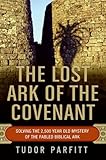
The Lost Ark of the Covenant: Solving the 2,500 Year Old Mystery of the Fabled Biblical Ark by Tudor Parfitt is an extremely entertaining book. Mr. Parfitt's storytelling style is immediate and entertaining, and the adventure takes him across a number of continents and into contact with any number of fascinating people over the course of 20 years. It is Raiders of the Lost Ark in real life (and without the Nazis). There are things that bother me about the book... not the least of these being the conclusion. But we'll get there in a minute.

A number of things in the narrative strike me as factual errors. For example, speaking of the Ark, on page 14 Mr. Parfitt writes that the stories say that "Anyone who as much as looked at it would be blasted by its awesome power." Throughout his research Mr. Parfitt consults not only Biblical texts but also extracanonical historical material, so there may well be some source he is referring to that I am not familiar with, but the Bible does not, to my knowledge, say that anyone was punished by God or the Ark for looking at it. Touching it, yes. Possessing it if you were not God's chosen people, yes. Innocently looking at it, no.

On page 30 it says that the Ark "...was said to have generated some kind of energy that blasted a dry path across the River Jordan." I don't see anything about a blast of energy in the account of this in the book of Joshua. (Apparently this statement came from some oral traditions that I was not aware of before now.)

In another place, he ends a chapter by describing a time he dreamed about "A bellicose Moses [who] was dreaming of bloody revolt and war." This seems to me to be a misinterpretation of the character of Moses, who unless I am mistaken only killed with his own hands once, to protect his kinspeople, and who far from being quarrelsome was initially intimidated to even enter the presence of the Pharoah, in whose house he had been raised as a grandson. Another place where I think Parfitt misunderstands a Bible character is the section where he characterizes King David as doing a lewd dance holding the Ark, actually thrusting into the ark as he danced, which seems like an odd thing to do to an object of such holiness that you can't even "look at it" (according to Parfitt) without being blasted to smithereens (Biblical account is here). I guess looking at something is what, less holy that placing one's sexual organs into it? King David was clearly no choirboy, but I do think he had more reverence for God than that.

I did enjoy some of the stabs at humor in the story. There is a chapter that refers to an Indiana Jones-esque fear of snakes, and I loved this line, spoken to Parfitt by his native host: "'Nothing will get into your room. Except possibly...' his voice trailed off." A few times, however, what seems to be intended as humor struck me as borderline offensive, particularly his use of the word "Copt" as almost a derogatory term. He explains early in chapter 4 that a "Copt" is an Egyptian of particular racial and religious derivative, but then he constantly uses the term for his friend Daud only in derogatory statements, such as "you excitable little Copt," "you ineffably daft Copt," "You loathsome little Copt," "you dirty-minded Copt." It's almost as though he has turned the innocent word into a racial slur... it began to annoy me every time the word turned up on the page. Probably intended as humor, and usually I "get" the British sense of humor just fine (Parfitt is British), but in this case it seems to my American ears to fall flat.

I was also uncomfortable with the use several times of the word "cult" for religions that the text implies might be forms of Judaism. What is the difference between a "religion" and a "cult?" As best I can tell, the difference is that a "religion" is considered acceptable by the person using the word, and a "cult" is not. I imagine that to some people, my own religious beliefs would be considered a "cult." To me, it doesn't seem particularly scholarly to repeatedly use a word with negative connotations when perfectly good language without those connotations is available.

Before I give you my objections to Parfitt's conclusions, I'd better include a

***** SPOILER ALERT *****

This book is in large part a detective story. If you read the next few paragraphs, you'll know whodunnit. You have been warned; stop here if you don't want to know the ending!


Now that that's out of the way... in the course of Parfitt's research, he thinks over several things. One is that there were at least two Arks of the Covenant. The textual basis for this claim is that in one place it says that Moses made a wooden ark to contain the tablets that God gave him, and in another place it says that a craftsman named Bezalel made a more ornate ark which is described like we generally picture the ark today (the "Moses ark" is not actually described at all, except that it is made of wood). This is a view held by more historians than just Parfitt, but I'm not really sure if this constitutes indisputable evidence; just because something is not described in detail in one place and then it is described in detail somewhere else does not mean that it is not the same thing. And saying in one spot that Bezalel made it and in another spot that Moses made it doesn't to me rule out the two incidents being one and the same. If I hire a contractor to build a house and then tell a friend about it, don't I say "I'm building a house" even though I probably won't nail a single nail with my own hands?

But then Parfitt goes on to theorize that there may have been dozens of arks, and that scribes went back later and cleaned up the text so that it didn't show that, forgetting that one inconsistency. I can't imagine why scribes who would leave in things like their most celebrated king, an ancestor of their promised messiah, forcing sex on the wife of one of his officers and then having the officer killed in battle to cover it up, but then turn around and change the text over a gold box. It doesn't make any sense to me. It makes sense to Parfitt.

He also seems to believe that the whole idea for the ark was borrowed from similar religious relics already being used by the surrounding ethnic groups (for example, ark-like relics found in King Tut's tomb) and that this somehow gives less validity to the Ark's divine origins. I would counter with the idea that God speaks to people of individual times in terms that they can understand. Jesus' parables are not about jet airplanes... most of them are agricultural or just about plain people. I think it is highly likely that God had His people build a gold box for Him because they were aware that other religions had gold boxes for their own gods. The big difference is that where other boxes of the kind had a statue of the god himself sitting between two creatures, the Israelite ark had two creatures and between them was... an empty seat. Which would say something about that particular god to whoever saw it. Is this god so mysterious that they don't know what he looks like? Is he too holy to be personally rendered in gold? Since we're not ancient Arabs we probably will never know, but just because other religions may have boxes on poles among their relics does not invalidate this one.

Finally, Parfitt concludes that the ark was (the arks were?) a bowl-shaped drum called a "ngoma" which was used to create music, to carry objects, and which was loaded with primitive gunpowder and ignited to create flashes of fire and great noises. The enemies of the Israelites, he postulates, may have been given some mild poison to weaken their hearts, and then when the ngoma was ignited, the loud unexpected sound would have been enough to overtax their hearts and kill them. He believes that he has found the "original" Ark/ngoma in a museum in Zimbabwe... at least as original as it gets, since the Ark of Biblical times has since been destroyed and this one was built using the remains.

It's an interesting idea, but I don't buy it. To go that way you first have to assume that the Scriptures were intentionally altered to make a round drum look like a rectangular Egyptian box, and then you have to assume that it was not the holy power of a holy god that emanated from the Ark, but the ordinary power of low-grade gunpowder. Basically, you have to ignore the written canon of Scripture and substitute ideas gleaned from oral traditions, texts rejected centuries ago as inaccurate and inauthentic, and half-forgotten rumors. I am of the camp that chooses to assume that Scripture basically means what it says, and I don't really see a compelling reason to assume that just because we haven't found a gold-inlayed wooden box with metal rings on it that it doesn't exist somewhere, or at least didn't exist somewhere at some point in history. It makes for fun reading, but the ending didn't strike me as conclusive.

If you like Harrison Ford movies, by all means, read the book. It's fun to think about. I would caution you, though, to not easily abandon faith in Scripture, whether you are a Christian or a Jew, for something that calls itself scholarship. If Tudor Parfitt convinces you, that's fine. Maybe I'm wrong, but he didn't convince me.